What happened
SK Hynix has officially disclosed a larger capital expenditure plan aimed at expanding HBM production capacity and advanced packaging capability. The company says the spending will include new clean rooms and equipment intended to raise HBM4 production capacity. The search provider attached a date to the source page, but that date is not verified at page level, so this analysis stays with the company’s disclosed facts rather than treating the provider metadata as the publication date.
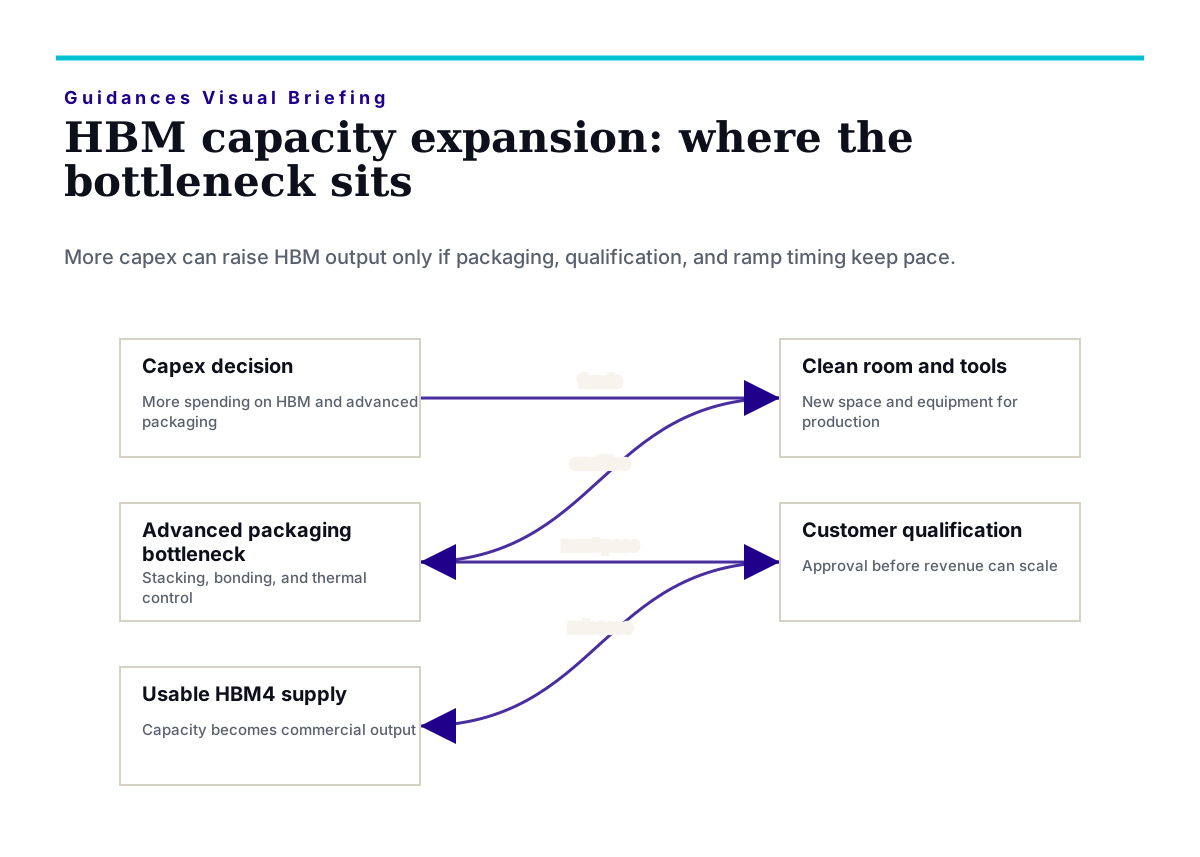
The important part of the announcement is not simply that SK Hynix is spending more. It is where the money is going. The company is not describing a broad DRAM expansion that could serve many memory categories. It is directing capital toward HBM and advanced packaging, which are the parts of the memory stack most tightly linked to AI accelerator performance and the most difficult to scale quickly.
Why the market cares
In AI infrastructure, memory is no longer a generic input. HBM sits at the point where semiconductor engineering meets system performance. Each generation has to deliver more bandwidth, better power efficiency, and tighter physical integration with the accelerator package it serves. That makes HBM capacity a strategic variable for the entire AI hardware chain, not just a component-level detail.
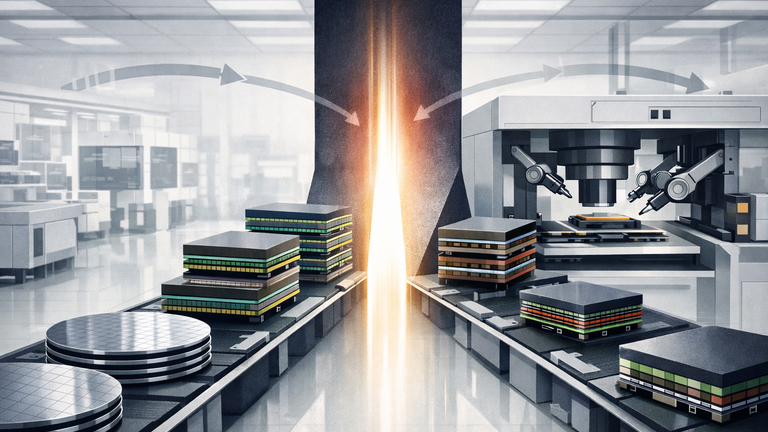
The market should care because the bottleneck is often not wafer output alone. Advanced packaging is a separate constraint. Stacking and bonding multiple memory dies, then integrating them with the logic package, requires clean-room conditions, specialized tools, and process stability that cannot be expanded overnight. A company can announce more front-end capacity and still remain constrained if back-end packaging does not keep pace.
HBM4 raises that issue further. The next generation is not just a faster version of the prior one. It demands tighter tolerances, more demanding thermal control, and more careful qualification by customers. That means the timing of the investment matters as much as the size. If the new capacity arrives too early, depreciation and operating costs come before revenue. If it arrives too late, the company risks missing the window when customer platforms are ready to ramp.
SK Hynix’s market capitalization is about KRW 1477.92T. That scale matters because it shows how central the company already is to the AI memory supply chain. It also means that incremental capex decisions can influence expectations around supply allocation, equipment demand, and the pace at which the industry can add HBM4 capacity. This is market context only and not investment advice.
Tech / policy link
Technically, HBM4 is a packaging story as much as a memory story. The source points to new clean rooms and equipment, which suggests the company is preparing for the process requirements of a more demanding generation. That is consistent with the idea that the next phase of AI memory growth depends on back-end capacity, not only on wafer starts.
Policy relevance exists, but it should be kept narrow. Governments in several markets have been paying more attention to advanced packaging because it is one of the less visible but more strategic parts of the semiconductor stack. Still, the source does not specify facility location, subsidy terms, export-control exposure, or any direct policy benefit. Those links remain unverified in this case and should not be overstated.
For operators, the practical policy question is whether future support programs, permitting, or trade rules make it easier or harder to bring advanced packaging capacity online. That is a next-check issue, not a conclusion supported by the current source.
Market Lens
Trigger: SK Hynix announced additional capex focused on HBM and advanced packaging, with HBM4 as the stated production target.
Mechanism: Clean-room construction and equipment purchases expand the company’s ability to produce advanced memory, but the commercial effect depends on qualification, yield, and customer ramp timing. The investment therefore affects not just capacity, but the schedule at which capacity becomes usable.
Affected assets and sectors: The direct exposure is SK Hynix and the HBM supply chain. Secondary exposure may reach semiconductor equipment, advanced packaging tools, and AI accelerator ecosystems. Any broader market reaction is unverified from the source alone, so those links should be treated as market interpretation rather than established fact.
Time horizon: The relevant horizon is medium term. Clean-room build-outs, tool installation, process tuning, and customer qualification all take time. Near-term effects are mostly signaling; operating effects are more likely to show up over several quarters.
Next check: The next official earnings release, capex commentary, HBM4 qualification updates, and any disclosure on packaging yield or production timing will be the most useful checkpoints. If the company or its customers provide platform-specific timing, that would sharpen the market read-through.
This section is market context only, not investment advice.
What to watch next
The first variable is customer qualification. HBM capacity only turns into revenue when the memory is approved for use in the relevant accelerator platform. The second is packaging yield. HBM4 is technically demanding, so the rate at which output becomes saleable matters as much as the nominal capacity figure. The third is competitive timing. Other memory suppliers are also investing in HBM, and the relative pace of qualification will shape supply allocation.
A fourth variable is the broader AI hardware cycle. If accelerator shipments, data-center build-outs, or server platform transitions slow, the demand case for new HBM capacity becomes less immediate. If they accelerate, the new capacity could become more valuable. The source does not resolve that question, so it remains a key item to verify in future company disclosures and customer updates.
Uncertainty and constraints
The source available here is a search-provider snippet from SK Hynix’s official newsroom. It confirms the direction of the investment and the HBM4 focus, but it does not provide the capex amount, facility location, production volume, or customer commitments. Because of that, this article avoids unsupported claims about financial impact, market reaction, or policy outcomes.
The analysis also avoids treating the provider-supplied date as the verified publication date. Since the date is not confirmed at page level, it is safer to treat the announcement as a disclosed corporate plan rather than a precisely dated event. Readers who need exact timing should check the company’s newsroom or formal investor materials directly.