Healthcare
Developing · 0 updatesFact 9/10Centene offers buyouts to some employees as managed care faces higher medical costs and policy changes
Article language
English
Centene has offered buyouts to some employees as it responds to higher medical costs, funding changes, and membership declines. The move highlights how managed-care economics are shaped by Medicaid exposure, ACA and Medicare mix, and policy-driven reimbursement factors.
Open article · no sign-in required
Sources and disclosure
What happened
Centene said it has offered buyouts to some employees, according to CNBC. The move comes as the health insurer contends with higher medical costs, funding changes, and membership declines. The company is a major Medicaid provider and also has exposure to other federal health plans, including Medicare and Affordable Care Act coverage. In a filing, Centene said first-quarter membership fell 6% year over year to 26.3 million. The report also says the company is preparing for the effect of more than $900 billion in Medicaid cuts over a decade. The available metadata is limited, so the operational scope of the buyout program, the number of employees affected, and the financial impact are not confirmed in the source snippet.
Why the market cares
For managed-care companies, this is not just a labor story. It is a signal about the pressure points that shape earnings quality in a business where premiums, medical utilization, government reimbursement, and membership mix all move together. When a large insurer with significant public-program exposure begins trimming costs, investors and operators tend to read that as a response to margin pressure rather than as an isolated human-resources decision.
The market relevance comes from the structure of the business. Medicaid-heavy insurers are exposed to state and federal funding decisions, eligibility redeterminations, and changes in the pace of medical spending. If medical costs rise faster than expected, administrative savings can help, but they rarely solve the core problem on their own. If membership declines, the fixed-cost base becomes harder to absorb. If policy support weakens, the revenue line can come under pressure even before the full effect appears in reported earnings. That is why a buyout program can matter to public markets even when the immediate financial effect is not yet visible.
There is also a valuation angle, though it should be treated cautiously. Managed-care stocks are often assessed on the durability of margins, the stability of enrollment, and the predictability of government reimbursement. A company that signals tighter cost control may be trying to defend those metrics. But the same signal can also imply that management sees a more difficult operating backdrop ahead. The source does not provide enough evidence to determine which interpretation should dominate, so any direct market reaction remains unverified.
Tech / policy link
The strongest linkage here is policy, not technology. Centene’s business is tied to Medicaid, Medicare, and ACA plans, which means its economics depend on reimbursement rules, eligibility policy, and federal-state funding arrangements. The snippet specifically points to more than $900 billion in Medicaid cuts over a decade, which, if realized as described, would be a material policy variable for the managed-care sector. The source does not provide the legislative details, timing, or implementation path, so the policy effect should be treated as a risk factor rather than a confirmed outcome.
Technology still matters in the background. Health insurers rely on claims processing systems, utilization management tools, member analytics, and provider-network operations to control costs and manage risk. When medical spending rises, the value of better data infrastructure and workflow automation increases. But this article does not mention a new platform, AI deployment, or digital transformation initiative. Any direct technology read-through is therefore limited and should be labeled unverified.
For public markets, the policy link is more immediate than the tech link. Medicaid exposure can affect earnings expectations for insurers, and those expectations can feed into sector sentiment for managed care, healthcare services, and adjacent administrative vendors. Whether that translates into a broader move in healthcare ETFs or indexes depends on the scale of the policy change and the next round of earnings guidance. That connection is plausible, but not confirmed by the source.
Market Lens
Trigger: Centene offered buyouts to some employees while citing higher medical costs, funding changes, and membership declines.
Mechanism: The buyout is a cost-management response. In managed care, lower administrative expense can support margins, but the larger drivers remain medical cost trend, enrollment mix, and reimbursement policy. If membership falls, the company has less revenue to spread across its fixed cost base. If Medicaid funding weakens, the pressure can extend beyond one quarter.
Affected sectors / companies / ETFs / indexes: Managed-care insurers, Medicaid-heavy health plans, ACA and Medicare plan operators, and healthcare administration vendors are the most directly relevant sectors. Centene is the named company. Any direct effect on specific ETFs or indexes is unverified from the available material.
Time horizon: Near term, the next earnings release and membership update matter most. Over the medium term, Medicaid policy and funding decisions will be the larger driver. Over a longer horizon, the sector will also be shaped by medical cost inflation and enrollment trends.
Next check: Watch Centene’s next earnings call, membership data, medical cost ratio commentary, and any updated guidance on administrative expense. Also watch federal and state Medicaid policy deadlines and budget developments. This is market context only, not investment advice.
What to watch next
The most important question is whether the buyout program is a narrow workforce adjustment or part of a broader operating reset. If management pairs the move with more explicit cost targets, that would suggest a more deliberate margin-management strategy. If not, the action may simply reflect a cautious response to a difficult reimbursement environment.
The second question is whether the membership decline is stabilizing. A 6% year-over-year drop is meaningful in a scale business, but the market will care more about whether the trend continues than about the single data point itself. The third question is whether medical cost pressure is concentrated in one line of business or broad-based across Medicaid, Medicare, and ACA plans. The answer will affect how investors and competitors interpret the durability of Centene’s earnings base.
The source does not mention share-price movement, analyst revisions, or peer comparisons, so those effects should not be assumed. It also does not provide enough detail to infer a direct impact on semiconductor demand, AI infrastructure, or other capital-expenditure themes. The most defensible read-through remains the policy-sensitive economics of managed care.
Market lens
Healthcare signals need evidence, reimbursement, and market-structure separation
Treat healthcare-linked stories as informational market context: separate clinical evidence, regulatory status, reimbursement, adoption, and listed-company read-throughs.
Impact path
Health signal → evidence gate
Signals to watch
- FDA/CMS or company primary-source updates
- Reimbursement, hospital workflow, or payer adoption evidence
- Sector read-throughs supported by filings, revenue, margin, or guidance
Verification schedule
D+1 · Jun 17
Is the medical or regulatory claim directly sourced?
D+3 · Jun 19
Does reimbursement or adoption evidence support the business mechanism?
D+7 · Jun 23
Did market framing stay informational rather than advice?
Informational context only — not investment, legal, tax, or financial advice.
Builder Implications
- Founders building for insurers should design products around cost control, claims efficiency, and policy volatility rather than assuming stable reimbursement conditions.
- Health-tech vendors selling into Medicaid or ACA-heavy customers need reporting tools that help clients track membership, utilization, and administrative expense in near real time.
- Operators should treat policy calendars as product inputs: funding deadlines, eligibility changes, and reimbursement updates can matter as much as feature development in this segment.
Want follow-up alerts? Subscribe by email after reading the public article.
Market lens
Healthcare signals need evidence, reimbursement, and market-structure separation
Treat healthcare-linked stories as informational market context: separate clinical evidence, regulatory status, reimbursement, adoption, and listed-company read-throughs.
Impact path
Health signal → evidence gate
Signals to watch
- FDA/CMS or company primary-source updates
- Reimbursement, hospital workflow, or payer adoption evidence
- Sector read-throughs supported by filings, revenue, margin, or guidance
Verification schedule
D+1 · Jun 17
Is the medical or regulatory claim directly sourced?
D+3 · Jun 19
Does reimbursement or adoption evidence support the business mechanism?
D+7 · Jun 23
Did market framing stay informational rather than advice?
Informational context only — not investment, legal, tax, or financial advice.
Visual Briefing
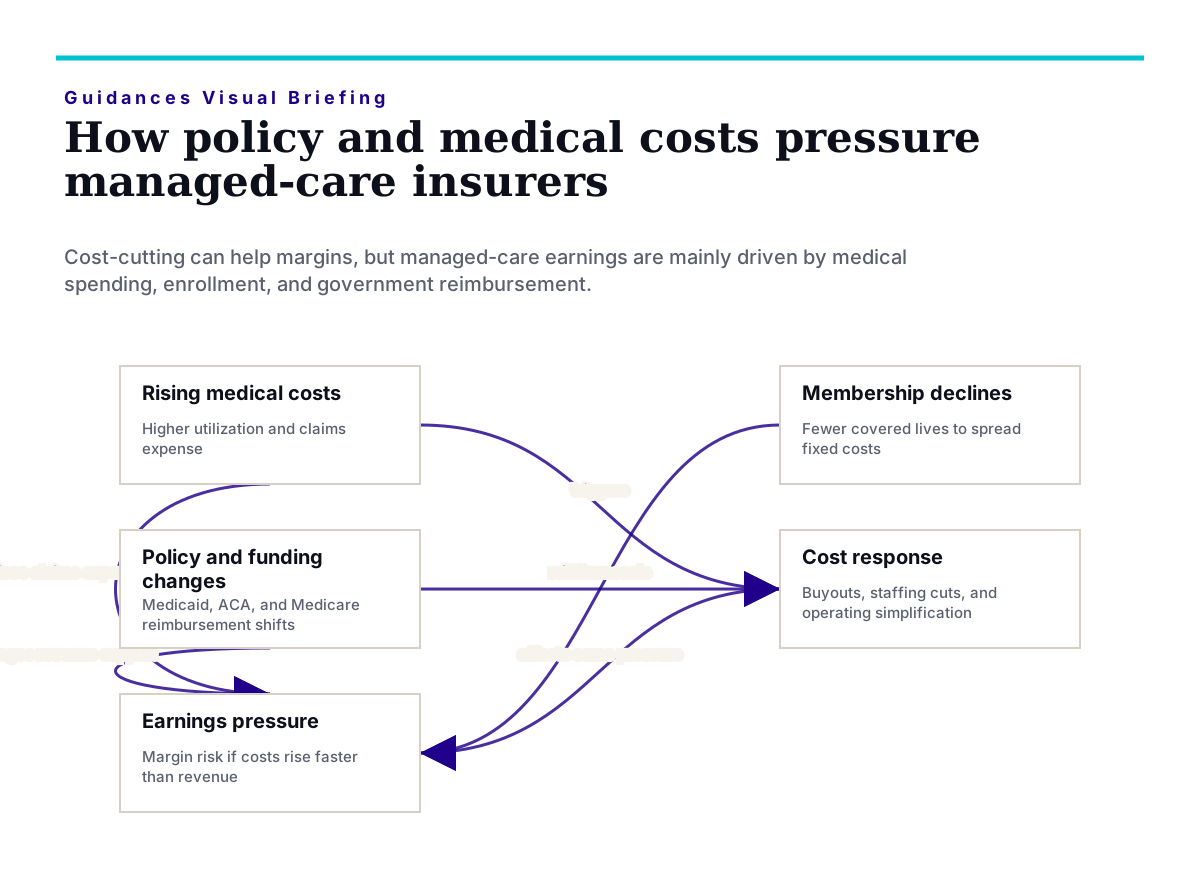
A simple cause-and-effect map of why a buyout program can signal broader pressure in managed care.
Corrections and safety
See a factual, privacy, rights, or safety issue? Review the corrections process or contact Guidances before relying on this article for important decisions.