Healthcare
Developing · 0 updatesFact 8/10GLP-1 Obesity Drugs May Improve Testosterone and Sperm Quality in Men, Endocrine Society Review Suggests
Article language
English
A systematic review presented at the Endocrine Society's annual meeting in Chicago suggests that GLP-1 receptor agonists may affect testosterone levels and sperm quality indicators in men with obesity. The findings are early-stage and require further validation. This article is not medical advice and not investment advice.
Open article · no sign-in required
Sources and disclosure
This article is not medical advice and not investment advice.
A systematic review presented at the Endocrine Society's annual meeting in Chicago suggests that GLP-1 receptor agonists may increase testosterone levels and improve sperm quality indicators in men with obesity. The presentation indicates that next-generation obesity drugs introduced over the past five years could have effects beyond weight loss, prompting additional interest from the pharmaceutical industry and reproductive medicine sectors.
What Happened
Researchers presented findings from a systematic review of randomized controlled trials examining GLP-1 drugs and testosterone measurements in men at the Endocrine Society's annual meeting. According to the presentation, some of the reviewed studies involved men with low testosterone levels and observed hormonal changes following GLP-1 drug administration. GLP-1 medications work by binding to the same receptor as the natural hormone glucagon-like peptide-1, creating a feeling of fullness.
The research team conducted a literature search to understand how GLP-1 drugs affect male fertility and identified evidence of improved sperm quality indicators in men with obesity. This finding suggests that the therapeutic scope of GLP-1 drugs could extend beyond weight management. However, the presentation represents a systematic review stage, and further validation through large-scale prospective clinical trials is required.
A systematic review is a method of synthesizing previously published studies to identify patterns. This presentation was made at a conference and has not been published as a peer-reviewed journal article. Therefore, detailed information on study design, sample size, effect size, and statistical significance is limited.
Why the Market Cares
The GLP-1 receptor agonist market has experienced rapid growth in recent years. Leading products include Novo Nordisk's Wegovy and Ozempic, and Eli Lilly's Mounjaro and Zepbound, which are approved for diabetes and obesity treatment and generate substantial revenue. This presentation raises the possibility that these drugs could be studied for additional uses in male reproductive health.
The male reproductive health market has remained relatively underdeveloped. While testosterone replacement therapy and infertility treatments exist, therapeutic options that address obesity-related hormonal imbalances and reduced sperm quality together have been limited. If GLP-1 drugs can provide weight loss alongside improved testosterone levels and sperm quality indicators, pharmaceutical companies may expand research and clinical trials in this area.
From a pharmaceutical industry perspective, indication expansion can create additional clinical development opportunities and broaden regulatory review pathways. Male reproductive health is also a field with growing public attention, which could support future discussions around patient demand and healthcare access.
Technology and Policy Link
The mechanism of action of GLP-1 drugs is based on understanding biological signaling pathways. These medications bind to GLP-1 receptors to promote insulin secretion, delay gastric emptying, and suppress appetite in the central nervous system. The research findings suggest that GLP-1 signaling may also be related to the reproductive hormone axis, which may be relevant for drug development and clinical trial design.
From a regulatory standpoint, review of new indications requires randomized controlled trials, long-term safety data, and clear evidence of clinical benefit. The U.S. Food and Drug Administration (FDA) and the European Medicines Agency (EMA) apply stringent standards to reproductive health indications. Pharmaceutical companies can use this systematic review as a basis for designing additional clinical trials and engaging in discussions with regulatory authorities.
Insurance reimbursement policy is also a critical variable. Currently, GLP-1 drugs are primarily reimbursed for diabetes and obesity treatment, but if additional indications are considered in the future, coverage scope and patient cost-sharing could be discussed. This would affect drug accessibility and market penetration.
Market Lens
This presentation is an early signal that could inform the long-term research and development strategies of GLP-1 drug manufacturers. The trigger is the systematic review presentation at the Endocrine Society's annual meeting, and the core finding is the potential for GLP-1 receptor agonists to affect testosterone levels and sperm quality indicators in men with obesity.
Affected sectors include the pharmaceutical industry, particularly companies developing and marketing GLP-1 drugs. Novo Nordisk and Eli Lilly are major players in this space, and their research and development pipelines, clinical trial plans, and regulatory submission strategies may take this presentation into account. Companies in the male reproductive health and infertility treatment sectors may also be indirectly affected.
The next check points include pharmaceutical companies' clinical trial plan announcements, progress in consultations with regulatory authorities, and additional academic research results. Particularly important will be the design and registration of large-scale randomized controlled trials, and peer-reviewed publications in major academic journals. Attention should also be paid to whether male reproductive health is mentioned in pharmaceutical companies' quarterly earnings releases and research and development updates.
This analysis is market context, not investment advice. It is not medical advice.
What to Watch Next
Whether pharmaceutical companies plan additional clinical trials based on this presentation is key. Particularly important is the registration of prospective randomized controlled trials with male reproductive health as a primary endpoint. Also critical are the results of pre-submission consultations with regulatory authorities and the detailed content of peer-reviewed publications in academic journals.
Uncertainty is substantial. A systematic review synthesizes existing studies, and conclusions can vary depending on individual study sample sizes, study designs, and outcome measurement methods. This presentation was made at a conference and has not been published as a peer-reviewed journal article. Therefore, detailed information on study design, sample size, effect size, and statistical significance is limited.
The long-term effects of GLP-1 drug use on male fertility, potential adverse events, and comparative effectiveness with other treatments have not been sufficiently validated. Additionally, distinguishing between the effects of weight loss itself on testosterone levels and sperm quality versus the direct effects of GLP-1 drugs is an important challenge.
Insurance reimbursement policy and patient access are also variables. Even if additional indications are considered, market penetration may be limited if insurers do not expand coverage. Patient awareness and acceptance, as well as prescribing patterns among healthcare professionals, are also important factors.
Market lens
Healthcare signals need evidence, reimbursement, and market-structure separation
Treat healthcare-linked stories as informational market context: separate clinical evidence, regulatory status, reimbursement, adoption, and listed-company read-throughs.
Impact path
Health signal → evidence gate
Signals to watch
- FDA/CMS or company primary-source updates
- Reimbursement, hospital workflow, or payer adoption evidence
- Sector read-throughs supported by filings, revenue, margin, or guidance
Verification schedule
D+1 · Jun 18
Is the medical or regulatory claim directly sourced?
D+3 · Jun 20
Does reimbursement or adoption evidence support the business mechanism?
D+7 · Jun 24
Did market framing stay informational rather than advice?
Informational context only — not investment, legal, tax, or financial advice.
Builder Implications
- Clinical data infrastructure opportunity: Research into new indications for GLP-1 drugs could increase demand for large-scale clinical trial data collection, analysis, and management platforms. Developers of tools supporting reproductive health biomarker measurement, patient-reported outcome collection, and long-term follow-up may find opportunities.
- Regulatory technology and compliance tools: The review process for new indications involves complex regulatory requirements. Software platform developers supporting clinical trial design optimization, regulatory submission document automation, and safety monitoring can provide value as pharmaceutical company partners.
- Male reproductive health information platforms: Increased interest in male reproductive health could create demand for related information applications, remote monitoring tools, and patient education platforms. Solutions that integrate obesity management and reproductive health in particular could offer differentiated value propositions.
This article is not medical advice and not investment advice.
Want follow-up alerts? Subscribe by email after reading the public article.
Market lens
Healthcare signals need evidence, reimbursement, and market-structure separation
Treat healthcare-linked stories as informational market context: separate clinical evidence, regulatory status, reimbursement, adoption, and listed-company read-throughs.
Impact path
Health signal → evidence gate
Signals to watch
- FDA/CMS or company primary-source updates
- Reimbursement, hospital workflow, or payer adoption evidence
- Sector read-throughs supported by filings, revenue, margin, or guidance
Verification schedule
D+1 · Jun 18
Is the medical or regulatory claim directly sourced?
D+3 · Jun 20
Does reimbursement or adoption evidence support the business mechanism?
D+7 · Jun 24
Did market framing stay informational rather than advice?
Informational context only — not investment, legal, tax, or financial advice.
Visual Briefing
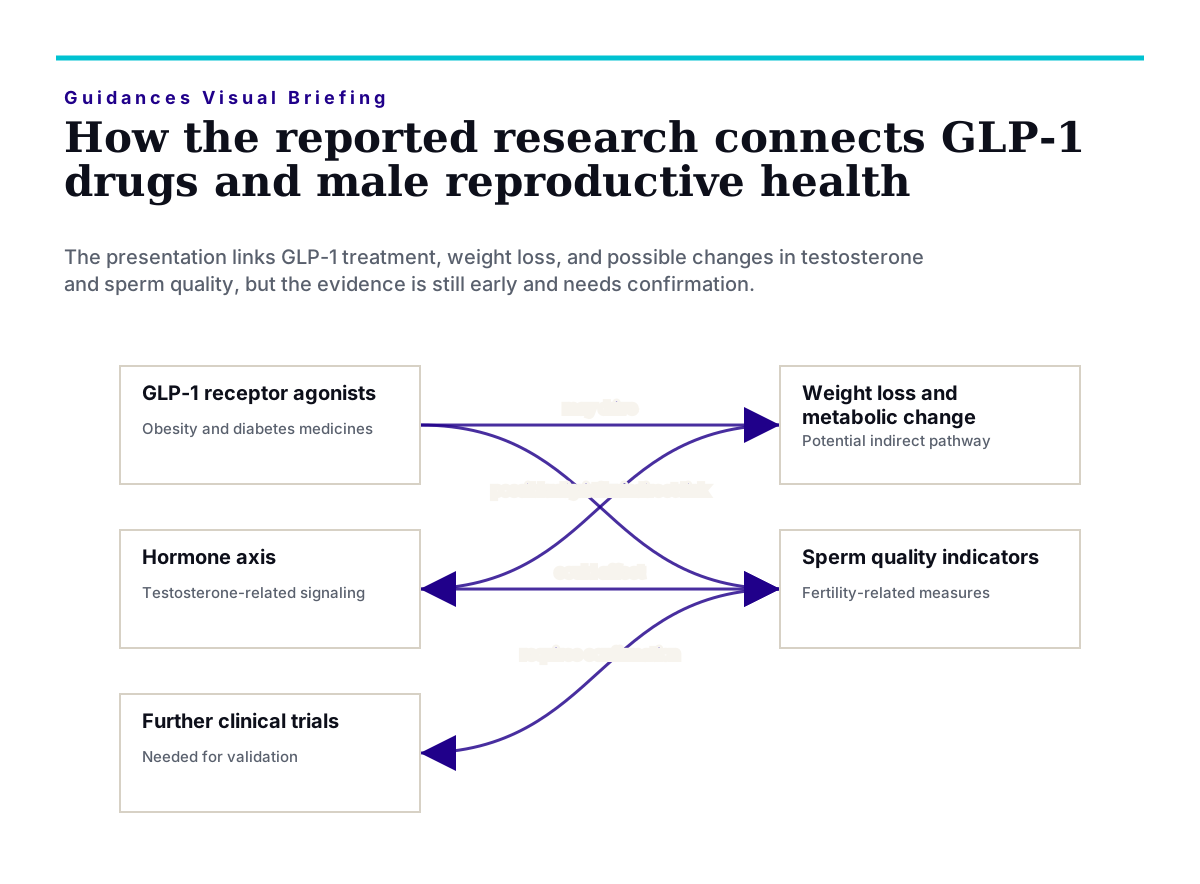
A simple cause-and-effect map of the early research signal presented at the Endocrine Society meeting.
Corrections and safety
See a factual, privacy, rights, or safety issue? Review the corrections process or contact Guidances before relying on this article for important decisions.