What happened
A CNBC video snippet attributes to Eurasia Group’s Dan Wang a view that China’s exports remain highly important to the global economy and that the recent rise in U.S. AI capital spending may also be affecting China through AI-related exports. The same snippet says China remains a major supplier of critical components, which helps explain why its trade role is still difficult to replace. Because the available material is limited to a headline and short excerpt, the safest reading is not a full reconstruction of the interview but a narrow analysis of what the claim implies for supply chains, industrial policy, and market structure.
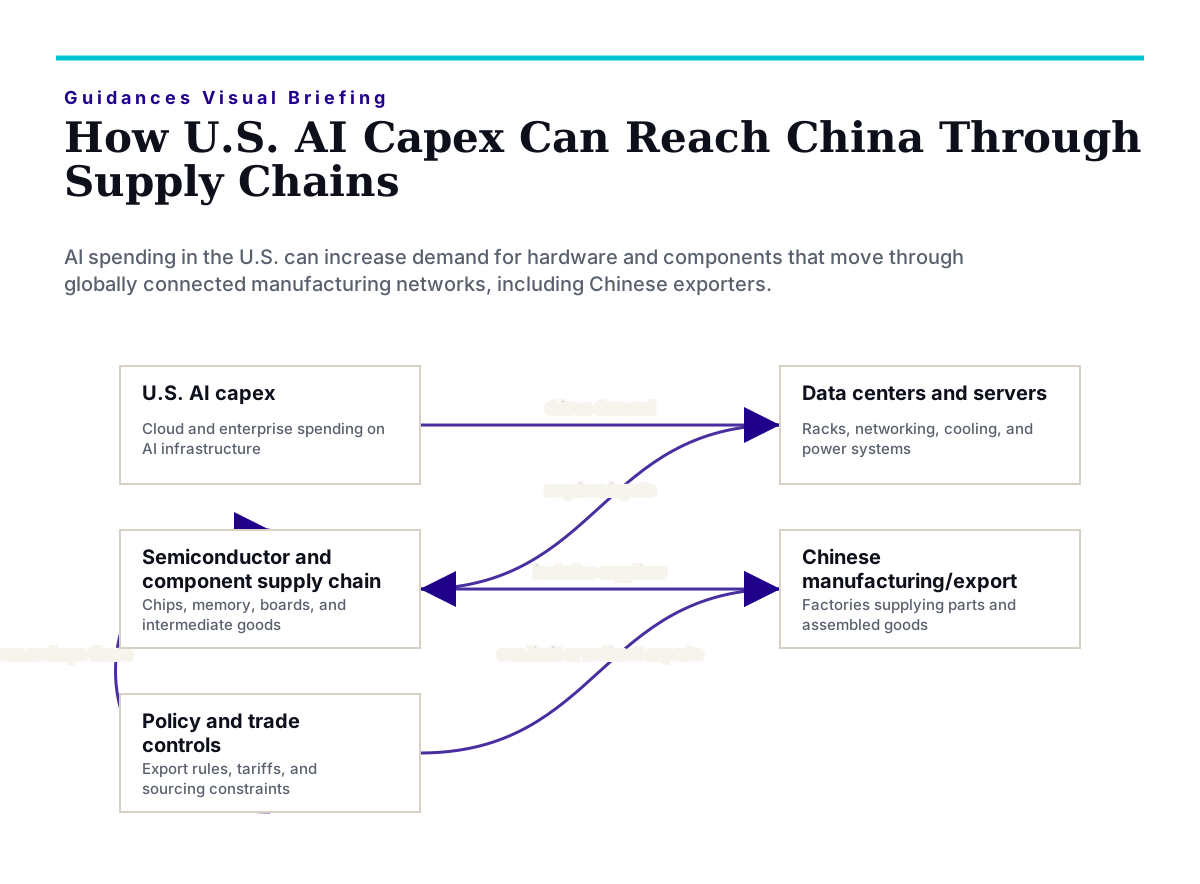
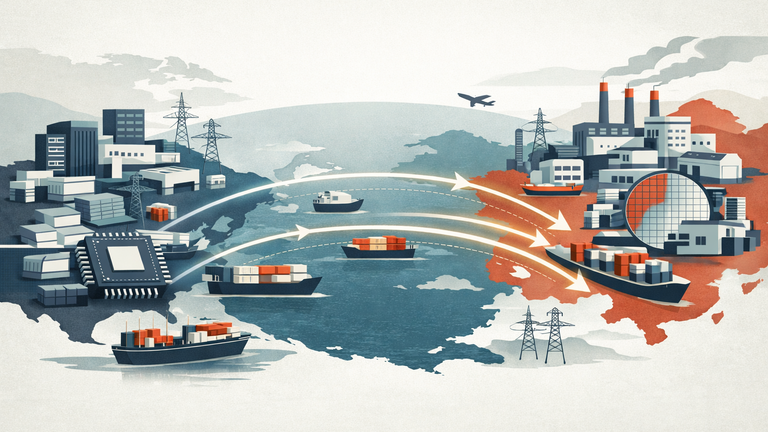
The immediate takeaway is that AI investment is not only a story about U.S. software platforms or a handful of large-cap technology names. It is also a story about physical infrastructure, imported components, manufacturing capacity, and cross-border industrial linkages. When a market narrative begins with AI capex, it often ends in semiconductors, servers, power equipment, cooling systems, and logistics. The snippet suggests that China may still sit inside that chain in meaningful ways, even as policymakers in Washington continue to push for greater resilience and selective decoupling.
Why the market cares
Markets care because AI spending has become one of the most important demand signals in technology and industrial supply chains. If U.S. companies are increasing AI capex, that spending can ripple through semiconductor makers, data-center operators, networking vendors, electrical equipment suppliers, and construction-related industries. If some of the inputs for those systems are sourced from China, then Chinese exporters may benefit indirectly from a U.S.-led investment cycle.
That matters for public markets in several ways. First, it broadens the set of beneficiaries beyond the obvious U.S. mega-cap technology names. Second, it reinforces the idea that AI is a capex cycle, not just a software adoption cycle. Third, it keeps trade policy and export controls at the center of valuation debates. Investors do not need a precise ticker-level link to see the relevance: if AI infrastructure spending remains elevated, then the earnings outlook for upstream suppliers, contract manufacturers, and industrial enablers can shift materially.
The snippet also points to a larger macro question. If China remains embedded in critical supply chains, then attempts to reroute production may take longer and cost more than headline policy language suggests. That can affect margins, delivery times, inventory planning, and capital allocation across sectors. In other words, the market implication is not simply “China benefits” or “the U.S. benefits,” but that the global industrial system remains intertwined even under policy pressure.
Tech / policy link
From a technology perspective, AI capex is a physical build-out. It requires chips, memory, server racks, printed circuit boards, power management, networking gear, cooling systems, and often large-scale construction. If China supplies any of the critical components in that stack, then U.S. AI spending can translate into Chinese export demand even when the end customer is a U.S. cloud provider or enterprise buyer. The snippet does not identify which components are involved, so that linkage should be treated as directionally plausible but unverified at the product level.
The policy angle is equally important. U.S.-China technology relations have been shaped by export controls, industrial policy, and supply-chain diversification efforts. Those measures can reduce exposure in some areas while leaving other dependencies intact. That creates a market environment in which companies must plan for partial separation rather than a clean break. For founders and operators, the practical implication is that procurement, compliance, and manufacturing strategy are now strategic variables, not back-office details.
This also affects how investors interpret AI capex guidance. A company may present spending as a domestic growth story, but the underlying procurement may still depend on global suppliers. That means policy changes can alter cost structures, delivery schedules, and revenue timing even when end demand remains strong. The result is a more complex valuation framework for semiconductor, hardware, and infrastructure names.
Market Lens
Trigger: A CNBC snippet quoting Eurasia Group’s Dan Wang on China’s export role and the idea that U.S. AI capex may also be affecting China through AI-related exports.
Mechanism: Higher U.S. AI capital spending increases demand for chips, servers, networking, power, and cooling infrastructure. If Chinese firms supply critical components or intermediate goods in that chain, export volumes and factory utilization in China can rise. The mechanism is plausible at the supply-chain level, but the specific company-to-company links are unverified from the available metadata.
Affected sectors / assets: Semiconductors, server and networking hardware, electrical equipment, data-center infrastructure, industrial automation, and parts of the Chinese export complex are the most obvious sectors. U.S.-listed semiconductor names, data-center infrastructure providers, and Asia-focused manufacturing ETFs may be indirectly relevant. Any ticker-level reaction is unverified without additional reporting.
Time horizon: Medium term. AI capex is typically reflected over several quarters through earnings, backlog, and guidance rather than in a single day. Trade-policy effects can appear faster if new restrictions or exemptions are announced.
Next check: Watch upcoming earnings calls, capex guidance from cloud and semiconductor companies, monthly Chinese export data, and any U.S. policy updates on export controls or industrial subsidies. Those are the concrete checks that can confirm whether the narrative is translating into measurable demand.
What to watch next
The most important question is whether AI spending remains broad-based enough to sustain a multi-quarter supply-chain cycle. If it does, then the market will continue to focus on upstream beneficiaries: chipmakers, equipment vendors, power systems, and contract manufacturers. If spending becomes more selective, the benefits may narrow quickly.
A second question is whether policymakers respond to the apparent persistence of cross-border dependencies. If Washington tightens controls further, companies may need to redesign sourcing and compliance processes. If policy remains stable, the current supply-chain pattern may persist longer than many strategic plans assume. Either outcome matters for margins and capital expenditure planning.
A third question is data. The snippet offers a qualitative claim, but markets will want quantitative confirmation through trade statistics, company guidance, and order trends. Without that, the claim remains a useful framing device rather than a measurable market signal.
Uncertainty and constraints
The source material is thin. It does not provide the full interview, named companies, specific components, or a direct market reaction. It also does not establish a causal relationship between U.S. AI capex and any particular Chinese exporter. For that reason, the market links above should be read as analytical possibilities, not settled facts. This article is market context only, not investment advice.