Finance
Developing · 0 updatesFact 9/10Stock Futures Rise as Oil Falls After U.S.-Iran Interim Deal Report
Article language
English
According to the WSJ live-coverage snippet, global stocks and bonds rose while oil fell after reports of an interim U.S.-Iran agreement. Brent and WTI both dropped sharply, and U.S. equity futures, especially technology-heavy contracts, moved higher in early trading. The agreement is not due to be signed until Friday, and the snippet says some issues were deferred, so the market reaction remains provisional. This is market context only, not investment advice.
Open article · no sign-in required
Sources and disclosure
What happened
According to the WSJ live-coverage snippet, the market opened the session with a clear risk-on tone after reports of an interim U.S.-Iran agreement that would reopen the Strait of Hormuz. The snippet says global stocks and bonds were rallying, while oil prices fell sharply. Brent crude dropped more than 5 percent and was on track for its lowest close since early March. WTI, the U.S. benchmark, fell 6 percent. U.S. stock futures moved higher in early trading, and the technology-heavy Nasdaq 100 futures gained more than 2 percent. The same snippet also notes that the deal is not due to be signed until Friday and that more difficult issues, including Iran’s nuclear program, were pushed back. That places the market reaction in the category of an initial read-through rather than a settled policy outcome.
Why the market cares
Oil is one of the few prices that can move inflation expectations, corporate margins, transport costs, and central-bank thinking at the same time. A sudden drop in crude can ease pressure on airlines, logistics firms, chemicals producers, consumer companies, and other businesses that rely on fuel or freight. It can also reduce one source of headline inflation, which in turn can influence bond yields and valuation assumptions for growth stocks. That is one reason the snippet links lower oil with stronger equity futures and a rally in bonds. The market is not simply reacting to a geopolitical headline; it is repricing a possible shift in the cost structure of the global economy.
At the same time, the reaction should be treated carefully. The agreement is interim, not final, and the snippet explicitly says the harder issues were deferred. That means the market is responding to a reduction in tail risk, not to a fully resolved supply picture. For operators and investors alike, the distinction matters. A temporary easing in tension can move prices quickly, but sustained changes in energy markets usually require evidence that the new arrangement is durable and enforceable.
Tech / policy link
This is not a technology story in the narrow sense, but it has a real operating link to technology infrastructure. Lower oil prices can affect freight, industrial power costs, and the broader cost base for data centers, manufacturing, and global supply chains. For AI infrastructure in particular, the direct driver is not crude itself but the chain of costs that sit around it: electricity generation inputs, cooling, logistics, and the economics of building and operating distributed compute capacity. If energy prices remain lower, that can modestly improve the cost environment for capital-intensive digital infrastructure. If the move proves temporary, the effect is limited.
On the policy side, the snippet points to a diplomatic development that could alter the market’s view of Middle East supply risk. That matters for macro policy because energy prices feed into inflation readings, and inflation readings feed into rate expectations. A lower oil path can ease pressure on policymakers, but only if it persists long enough to show up in official data. The source does not support a direct claim about any specific policy shift, company, or ETF reaction, so those links should be treated as unverified.
Market Lens
Trigger: Reports of an interim U.S.-Iran agreement and the prospect of reopening the Strait of Hormuz.
Mechanism: The headline reduces perceived supply disruption risk, which lowers the geopolitical premium embedded in crude prices. Lower crude can improve inflation expectations, support bond prices, and lift valuation-sensitive equities, especially growth and technology names.
Affected assets/sectors: The snippet directly references Brent crude, WTI, U.S. stock futures, Nasdaq 100 futures, global stocks, and bonds. Sector read-throughs are most plausible for airlines, transportation, chemicals, consumer companies, and other fuel-sensitive businesses. Energy producers and related service names may face pressure if lower crude persists. Any specific ticker, ETF, or index-level causal move beyond the snippet is unverified.
Time horizon: The first reaction is immediate, measured in hours to days. The more important question is whether the move survives the weekend and the scheduled Friday signing. If it does not, the market may treat the move as a short-lived repricing.
Next check: Friday’s signing, any follow-up statement on implementation, the next close in Brent and WTI, and the next inflation or central-bank communication cycle. Earnings guidance from energy-intensive sectors will also matter because it can show whether lower crude is feeding into margins.
This is market context only, not investment advice.
What to watch next
The first item to watch is whether the agreement is signed on the stated timeline. The second is whether crude holds its losses after the initial headline effect fades. The third is whether equity futures translate into cash-market gains once trading opens, and whether the leadership remains concentrated in technology or broadens into cyclicals. The fourth is whether bond markets interpret the move as a meaningful inflation relief signal or simply as a temporary reduction in geopolitical stress. The fifth is whether upcoming macro data confirm any change in the inflation path.
It is also worth watching for second-order effects in corporate commentary. Companies with high fuel exposure may adjust guidance if lower oil persists, while capital-intensive technology operators may frame the move as a modest improvement in operating costs rather than a strategic shift. Because the source is a live-coverage snippet, not a full article, those operating implications should be treated as plausible read-throughs rather than confirmed outcomes.
Uncertainty and constraints
The available information is thin. The source is a short live-market snippet, and the raw article content is not available. That means the exact terms of the interim deal, the legal status of the agreement, and the durability of any supply normalization are not confirmed here. The market reaction could also reflect positioning, not just fundamentals. In other words, the move in oil and futures may be amplified by traders adjusting exposure to a headline they had not fully priced.
There is also a limit to how far one should extend the technology read-through. Lower energy prices can help the operating environment for data centers and industrial software, but the snippet does not support a direct claim about AI demand, semiconductor orders, or cloud capex. Those links remain possible but unverified. The most defensible conclusion is narrower: energy prices moved, and that can matter for inflation, margins, and risk appetite if the move persists.
Market lens
Separate infrastructure signal from investable outcome
Treat market-linked stories as context: identify the mechanism, then wait for evidence before treating it as an outcome.
Impact path
Signal first, outcome later
Signals to watch
- Primary-source guidance and filings
- Price, volume, margin, and renewal evidence
- Follow-up reporting that confirms or rejects the mechanism
Verification schedule
D+1 · Jun 17
Is the mechanism visible in primary data?
D+3 · Jun 19
Do follow-up sources confirm direction and magnitude?
D+7 · Jun 23
Did the initial read overstate the market effect?
Informational context only — not investment, legal, tax, or financial advice.
Builder Implications
- Founders with fuel-heavy logistics or manufacturing footprints should revisit near-term cost assumptions, but only as a scenario check until the agreement is confirmed and crude stabilizes.
- AI and cloud operators should monitor whether lower energy prices translate into better power and cooling economics, especially for capacity planning and data-center expansion.
- Teams with exposure to global supply chains should watch the next round of macro data and central-bank commentary, because the market impact of this headline will likely run through inflation expectations rather than through a direct technology channel.
This analysis is market context only, not investment advice.
Want follow-up alerts? Subscribe by email after reading the public article.
Market lens
Separate infrastructure signal from investable outcome
Treat market-linked stories as context: identify the mechanism, then wait for evidence before treating it as an outcome.
Impact path
Signal first, outcome later
Signals to watch
- Primary-source guidance and filings
- Price, volume, margin, and renewal evidence
- Follow-up reporting that confirms or rejects the mechanism
Verification schedule
D+1 · Jun 17
Is the mechanism visible in primary data?
D+3 · Jun 19
Do follow-up sources confirm direction and magnitude?
D+7 · Jun 23
Did the initial read overstate the market effect?
Informational context only — not investment, legal, tax, or financial advice.
Visual Briefing
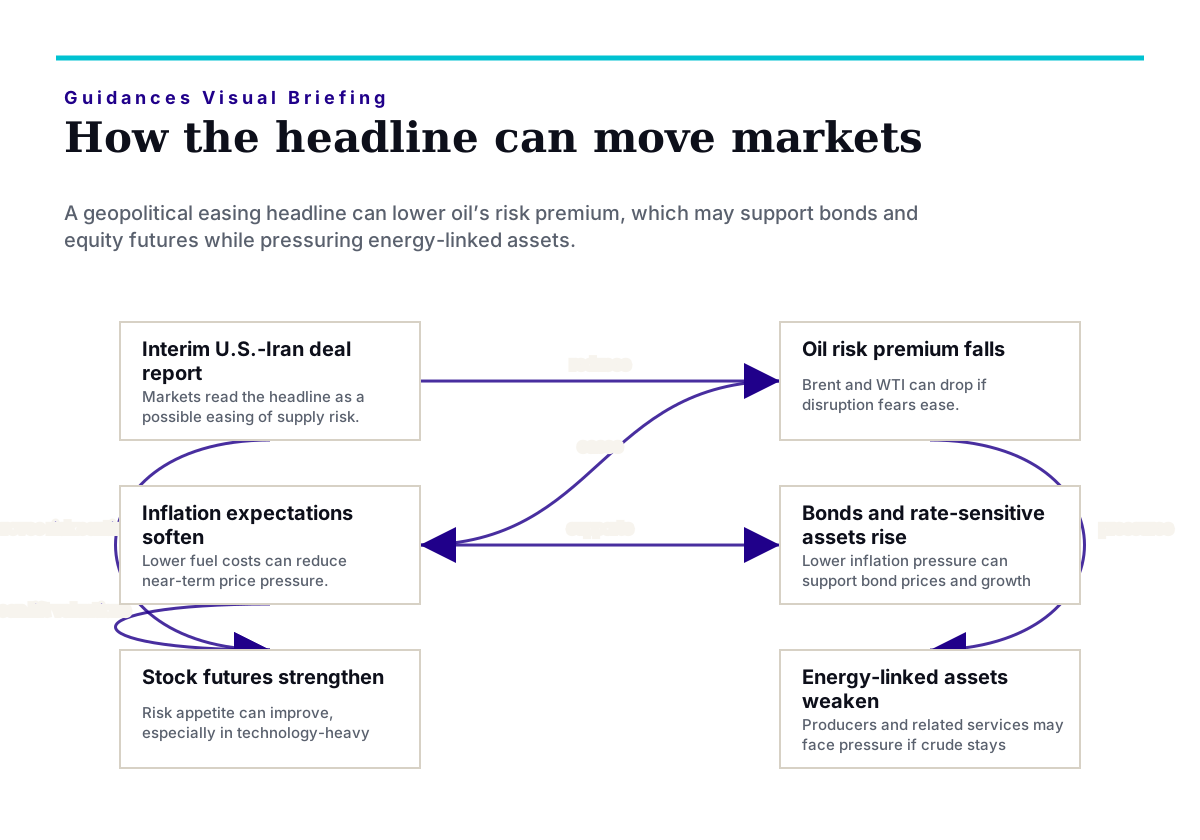
A reported diplomatic easing can move through oil first, then inflation expectations, then bonds and equities.
Corrections and safety
See a factual, privacy, rights, or safety issue? Review the corrections process or contact Guidances before relying on this article for important decisions.