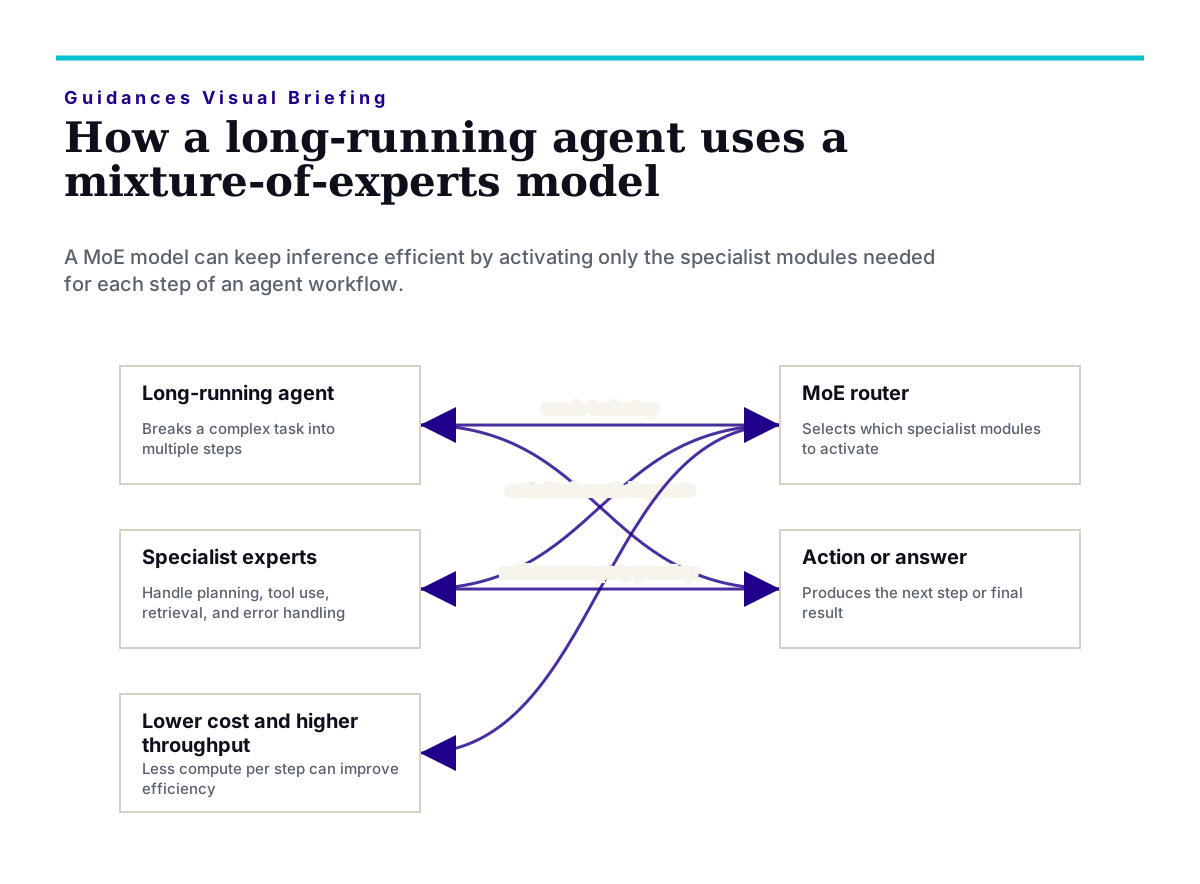
NVIDIA has introduced Nemotron 3 Ultra, a model designed to improve reasoning performance in long-running agent systems. The model uses a mixture-of-experts (MoE) architecture with 550 billion parameters, of which 55 billion are active during inference. According to NVIDIA's official developer blog, the model is designed for reasoning and orchestration tasks in long-running agents.
The mixture-of-experts architecture activates only a subset of the total parameters during inference, which can increase speed and reduce computational cost. NVIDIA says Nemotron 3 Ultra achieves five times higher throughput compared with other open models in its class. The company also says the model can reduce costs for agentic tasks by up to 30 percent. These figures are relevant because long-running agents perform repeated reasoning and decision-making steps, making the cost and speed of individual inferences important to overall operational efficiency.
Long-running agents are systems that go beyond single query-response interactions. They break complex tasks into multiple steps and use reasoning results at each stage to determine subsequent actions. In areas such as customer support, research assistance, and software development automation, agents may execute dozens to hundreds of inference calls. In such environments, the speed and cost of individual inferences affect the responsiveness and operating efficiency of the overall system. Nemotron 3 Ultra is designed with these requirements in mind.
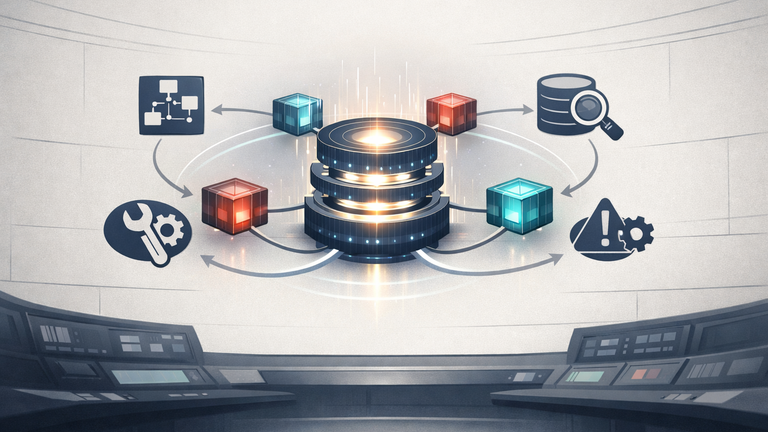
NVIDIA has supported enterprise generative AI workloads through the Nemotron series. Earlier versions focused primarily on tasks such as text generation, summarization, and classification. Nemotron 3 Ultra, however, targets the more complex area of agent orchestration. Orchestration involves coordinating multiple tools, APIs, and data sources, and linking the output of each step to the input of the next. This requires capabilities beyond text generation, including planning, state tracking, and error handling.
The mixture-of-experts architecture has gained attention in recent large language model development. While the total parameter count is large, only a subset of expert modules is activated during inference, reducing computational load. This approach can preserve model expressiveness while lowering inference costs. In the case of Nemotron 3 Ultra, only 55 billion of the 550 billion parameters are active, which in theory allows higher performance at an inference cost similar to a 55-billion-parameter model.
The five-fold throughput improvement and 30 percent cost reduction figures cited by NVIDIA are based on comparisons with other open models in the same class. However, specific benchmark conditions, comparison targets, and measurement methods are not detailed in the available information. Actual performance in production environments may vary depending on task type, infrastructure configuration, batch size, and other factors. Developers and enterprises should validate performance against their own workloads.
The economics of agent systems are not determined solely by model inference costs. Costs associated with external API calls made by the agent, data storage and transfer, and infrastructure operations must also be considered. Reliability and accuracy are also important factors. If an agent makes incorrect decisions frequently and requires retries, overall costs may change despite faster inference. Therefore, the value of Nemotron 3 Ultra should be assessed by evaluating reasoning quality and stability alongside speed and cost.
NVIDIA has developed the Nemotron series with integration into its GPU infrastructure in mind. Nemotron 3 Ultra may be combined with NVIDIA's inference optimization technologies. For example, tools such as TensorRT-LLM and Triton Inference Server may enable additional performance gains. This can offer advantages as an integrated solution for enterprises using NVIDIA hardware, but performance on other hardware platforms requires separate validation.
The long-running agent market is still in its early stages but is growing. Agent systems are being deployed in areas including customer support automation, research assistance, software development tools, and data analysis. These systems do not perform single tasks but achieve complex goals through multi-step decision-making. As a result, inference efficiency and cost structure are key factors in the commercial viability of agent systems.
The release of Nemotron 3 Ultra indicates that NVIDIA is targeting the agent systems market. By offering a model specialized for agent orchestration rather than a general-purpose language model, the company is aiming to support specific workloads. This aligns with a broader industry trend in which model development is shifting from general-purpose capabilities toward task-specific optimization.
However, the model's actual performance and operational stability cannot be fully assessed based on the available information alone. Benchmark results, real-world use cases, and community feedback will be needed before the model's practical value can be determined. In comparisons with open models, factors such as licensing terms, deployment constraints, and customization possibilities should also be considered.