What happened
SK Hynix published its fourth-quarter 2024 earnings release through the company’s official newsroom. The disclosure said the quarter delivered record revenue and operating profit on a quarterly basis, with HBM and AI memory sales contributing to the result. The same release also looked forward: 2025 capex would rise, and the spending plan would concentrate on expanding HBM3E output and preparing HBM4, the next generation of high-bandwidth memory.
The source page date supplied by the search provider is January 23, 2025, but that date is not verified by source-page metadata. It should therefore be treated as a soft recency hint, not as the canonical publication date. That matters because the release is now old enough that the headline quarter is no longer the main story. What still matters is the operating roadmap it exposed. The capex plan announced in early 2025 has since become part of the supply-chain picture: equipment orders, fab conversion, packaging readiness, customer qualification, and allocation decisions. In other words, the document is older, but the mechanism it describes is still relevant.
Why the market cares
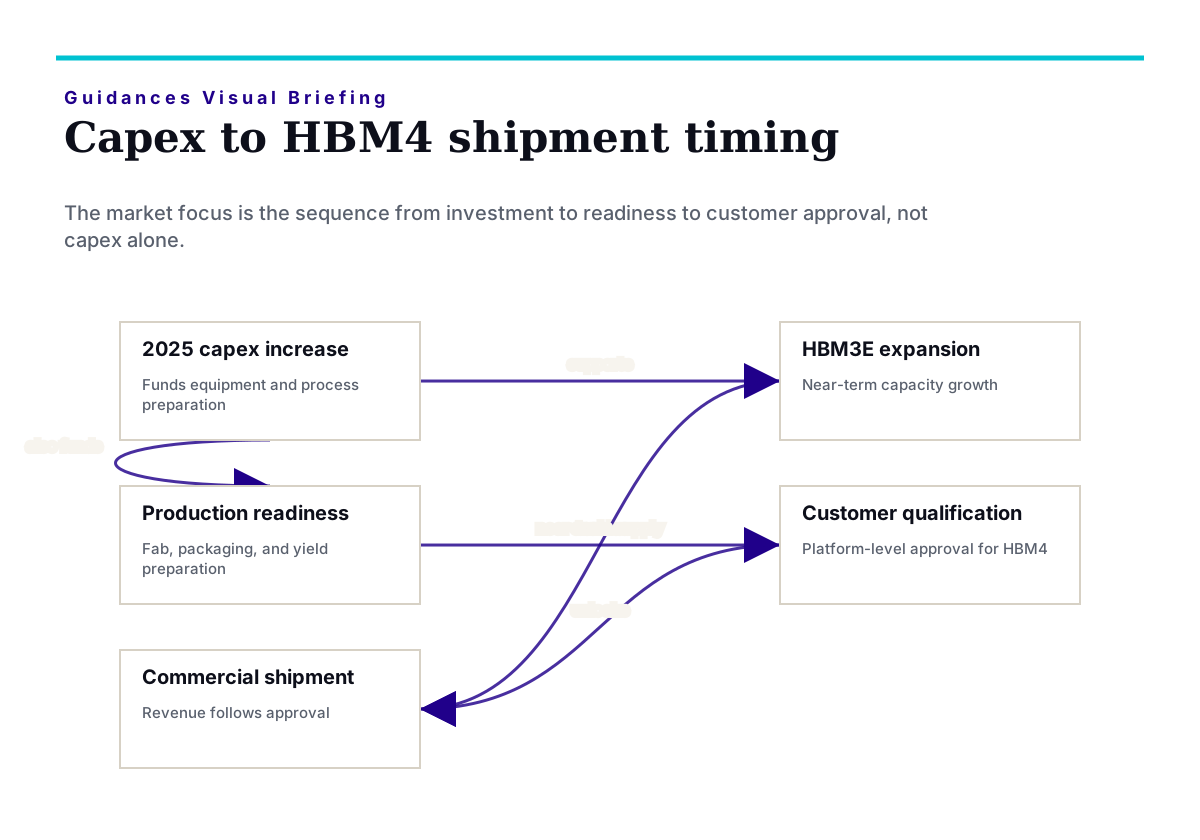
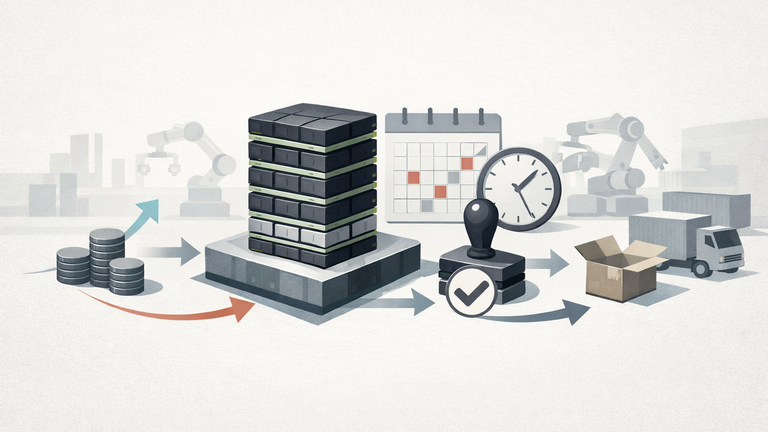
For memory makers, capex is not just a balance-sheet line. It is the first visible step in a chain that runs from tool orders to process readiness to customer approval to shipment revenue. That chain is especially long in HBM, where the product is not simply a denser memory chip but a tightly integrated stack that must work inside a customer’s accelerator platform. The result is a wide gap between spending and monetization.
HBM4 makes that gap more important, not less. The next generation is not a routine speed bump. It requires tighter coordination between memory, packaging, and the logic layer underneath the stack. That means the commercial timeline is partly outside the supplier’s control. SK Hynix can spend ahead of demand, but it cannot book meaningful shipment revenue until customers finish their own system-level checks. For operators tracking AI infrastructure buildouts, that timing mismatch is the key variable, not the capex headline by itself.
The scale context is also material. Based on the market data available for this analysis, SK Hynix’s market capitalization is KRW 1470.42T. That is not a valuation call; it is a reminder of how central the company has become to the AI memory supply chain. When a supplier of that size changes its capex posture, the effects can be reflected in semiconductor equipment, advanced packaging, and accelerator procurement planning.
Tech / policy link
The release points to two linked mechanisms. First, HBM3E is a near-term capacity story. More capex there means more output for the current generation of AI systems. Second, HBM4 is a qualification story. Spending on the next generation does not equal shipment volume. It creates the conditions for shipment volume once customer validation is complete.
That distinction matters because HBM4 is more dependent on external coordination than earlier generations. The product sits at the intersection of memory, packaging, and platform integration. A supplier can prepare its own process flow, but the customer’s accelerator roadmap still determines when the product can move from readiness to revenue. The market often compresses that sequence into a simple “next-gen memory” narrative. The actual mechanism is slower and more conditional.
Policy risk is part of the same picture. Export controls on advanced semiconductors continue to shape where the highest-performance memory can be deployed. SK Hynix, as a Korean supplier with meaningful exposure to U.S. customers, operates inside a compliance environment that can affect product allocation and regional demand. If rules or interpretations change, the addressable market for HBM4 can change with them. That is a policy link, not a forecast.
Market Lens
Trigger: SK Hynix’s official 4Q 2024 earnings release confirmed record quarterly results and a 2025 capex increase focused on HBM3E expansion and HBM4 preparation.
Mechanism: Capex turns into equipment orders, process work, and packaging readiness. HBM3E spending supports near-term supply. HBM4 spending supports the next product cycle, but only after customer qualification. The key bottleneck is the interval between production readiness and customer sign-off.
Affected assets and sectors: The direct company is SK Hynix (000660.KS), with a market capitalization of KRW 1470.42T. The broader read-through touches AI accelerator supply chains, advanced packaging vendors, semiconductor equipment makers, and logic foundries that may be involved in next-generation HBM base-die requirements. Any link to ETFs, index moves, or specific price reactions is unverified from the source alone and should not be treated as established.
Time horizon: HBM3E is a near-term capacity issue tied to 2025. HBM4 is a medium-term issue tied to qualification and early shipment timing across 2025 and 2026. Because the disclosure is older, the most useful question now is not what the plan was, but how much of it has already been executed.
Next check: The next official SK Hynix earnings release is the most important checkpoint, especially any segment detail on HBM mix, HBM4 readiness, and capex execution versus plan. Policy updates from the U.S. Commerce Department and customer announcements about AI platform transitions are secondary checks. FMP market data lists a next earnings date of March 3, 2027, but that should be treated as internal enrichment only and verified against the company’s IR calendar.
What to watch next
The practical question is whether the 2025 capex plan changed the shape of supply or merely prepared the ground for it. Four checks matter most.
-
HBM mix in later disclosures. If HBM3E remains the dominant contributor while HBM4 is still in qualification, that suggests the ramp is proceeding in stages rather than in one jump.
-
Customer validation milestones. HBM4 depends on platform-level approval. Announcements from major accelerator customers will be the clearest sign that the product is moving from engineering to commercial use.
-
Capex execution. The gap between announced spending and actual spending will show whether the company is pushing capacity aggressively or pacing investment against demand signals.
-
Policy updates. Any change in export-control scope or interpretation could alter where the highest-end memory can be sold and deployed.
Uncertainty and constraints
This article is based on a search snippet from SK Hynix’s official newsroom and on limited market-data context. The snippet confirms the direction of the earnings release and the capex plan, but it does not provide detailed revenue figures, capex amounts, or a precise HBM4 qualification calendar. For that reason, the analysis stays close to the verified facts and uses industry structure only where the source supports it. This is market context only, not investment advice.