AI
持續中 · 1 次更新Fact 8/10IBM 詳述代理式 AI 應用的部署路徑——單一代理採無程式碼,多代理系統採程式化部署
文章語言
繁體中文
IBM 針對其 watsonx 平台發布文件,區分代理式 AI 應用的部署方式。單一代理應用可透過無程式碼方式部署為 AI 服務,而以 CrewAI 或 LangGraph 等框架建構的多代理系統則被說明為需要程式化部署。
Open article · no sign-in required
来源与披露
The article provides a detailed, neutral examination of IBM's watsonx deployment documentation for agentic AI applications. Key factual claims are well-supported by the provided context: IBM's watsonx documentation does distinguish between no-code deployment for single-agent applications and programmatic deployment for multi-agent systems built with frameworks like CrewAI and LangGraph. The context confirms watsonx Orchestrate includes a no-code agent builder and supports integration with third-party agents including LangGraph. The article maintains a neutral, informational tone throughout, avoiding disparagement or reputation-damaging language. It appropriately qualifies uncertain areas (cost structures, specific APIs, production performance) as requiring further validation rather than making unsupported claims. The technical analysis of framework differences and deployment considerations is presented as informed interpretation rather than definitive fact. The article does not make accusations, speculate about intent, or use pejorative language. Minor deduction for some interpretive statements presented with high confidence that go slightly beyond what the source documentation explicitly confirms, but these remain within reasonable bounds of technical analysis.
Market lens
Agent runtime spending can spill into security, observability, and workflow infrastructure
The market signal is not another chatbot category; it is a possible budget shift toward the control layer around enterprise AI.
Impact path
Runtime spend → infra stack
Signals to watch
- Procurement language around audit logs and cost ceilings
- Security and observability vendors attaching agent controls
- Workflow platforms exposing approval and tool-call governance
Verification schedule
D+1 · Jun 13
Do buyers repeat audit/cost-control requirements?
D+3 · Jun 15
Do vendors publish runtime-control SKUs or partnerships?
D+7 · Jun 19
Do budgets move from pilots into operating infrastructure?
Informational context only — not investment, legal, tax, or financial advice.
IBM 透過其 watsonx 平台發布官方文件,概述代理式 AI 應用的部署策略,並區分單一代理與多代理系統。該文件為希望將代理應用 عملی化為 AI 服務的開發者與企業提供實務指引。
單一代理應用的無程式碼部署
IBM 說明,單一代理應用可透過無程式碼方式部署為 AI 服務。根據文件,這使開發者無須進行複雜的基礎架構設定或撰寫程式碼,即可部署代理。此方法可適用於執行明確定義任務的代理,例如客戶詢問回覆、文件摘要或資料擷取。
文件將 watsonx 平台描述為支援將這些單一代理封裝為 AI 服務,並以 API 端點或可與既有應用整合的形式提供。此方法被呈現為可讓業務使用者或領域專家在技術團隊介入最少的情況下,配置並部署代理。
單一代理部署的無程式碼路徑,在原型設計與初步驗證階段可能具有實用性。開發團隊可快速測試構想、蒐集使用者回饋,並評估適用性。無程式碼部署降低技術門檻,使更多組織成員能夠嘗試以代理為基礎的自動化。
多代理系統的程式化部署
相較之下,IBM 在文件中指出,多代理系統需要程式化部署。這一點尤其適用於以 CrewAI 或 LangGraph 等框架建構的系統。多代理系統涉及多個代理協作或依序執行任務,因此需要代理間通訊、狀態管理與任務協調。
CrewAI 被描述為支援以角色為基礎的代理協作框架。LangGraph 則被描述為 LangChain 生態系的一部分,並可用於定義狀態轉換與以圖為基礎的工作流程。使用這些框架的開發者必須以程式碼定義代理間訊息傳遞、錯誤處理與動態任務分配。
IBM 的程式化部署路徑可理解為支援在 watsonx 基礎架構上執行多代理應用,並進行資源配置,以及監控與記錄的設定。這與企業部署需求相符,例如容器化、API 閘道整合與擴展政策。
程式化部署使開發者能夠定義代理間通訊協定、處理失敗情境,並識別效能瓶頸。對於處理複雜業務流程或跨多個領域任務的系統而言,這種控制層級可能相當重要。多代理系統相較於單一代理,涉及更多設計決策與營運考量。
代理式 AI 部署的實務考量
將代理式 AI 應用部署為 AI 服務,所涉及的考量不僅限於模型託管。代理可能呼叫外部工具、查詢資料庫,並根據使用者輸入改變行為。這會帶來與延遲、成本、安全性與可觀測性相關的考量。
即使單一代理可採無程式碼部署,正式生產環境仍需檢視回應時間限制、外部 API 呼叫失敗的處理方式,以及使用者資料隔離。多代理系統則增加了代理間通訊開銷、狀態一致性,以及部分失敗時的復原策略等進一步考量。
watsonx 平台所描述的部署路徑,與 IBM 更廣泛的企業 AI 工具鏈相連,包括 AI 治理、模型監控與資料血緣追蹤。在此脈絡下,代理部署可被視為企業整合方法的一部分。
部署方式的選擇取決於應用複雜度,以及組織的技術能力與營運需求。無程式碼部署可能適合快速實驗與部署,而程式化部署則可用於需要更細緻控制與可擴展性的情境。兩種路徑並非互斥,組織可依使用案例採取混合方式。
框架選擇與部署複雜度
CrewAI 與 LangGraph 代表不同的設計方法。CrewAI 強調以角色為基礎的協作,而 LangGraph 則透過狀態機與圖結構來定義工作流程。兩者都可用於建構多代理系統,但部署時必須考量各自的執行階段需求與相依性。
IBM 提及這些框架,顯示其對開源代理框架相容性的考量。開發者可使用偏好的工具建構代理,並部署於 IBM 基礎架構之上。
框架選擇也會受到團隊技術堆疊與開發經驗影響。CrewAI 提供相對直觀的角色式模型,而 LangGraph 則提供更細緻的控制。開發者可依專案複雜度與團隊能力選擇合適框架。框架選擇也會影響長期維護與可擴展性。
企業環境中的代理部署
在企業環境中部署代理式 AI,除技術因素外,還需考量組織與法規因素。資料主權、法規遵循、稽核軌跡與存取控制,都是企業部署的核心要求。watsonx 平台被描述為提供可處理這些要求的工具。
當代理處理敏感資料或影響關鍵業務決策時,必須具備追蹤與說明代理行為的機制。這包括記錄代理呼叫了哪些工具、使用了哪些資料,以及遵循了何種推理過程。
企業部署也需要持續監控代理效能與穩定性。當代理出現非預期行為或外部工具呼叫失敗時,系統必須能迅速偵測並回應。這與警示、記錄與儀表板等營運工具相關。
進一步檢視的領域
該文件說明了部署方式的區別,但未包含詳細的部署程序、效能基準或成本結構。無程式碼部署可提供的客製化範圍,以及程式化部署可用的 API 與 SDK,仍可透過進一步文件或實際使用案例加以確認。
代理式 AI 的營運成本也是仍待進一步檢視的領域。若代理反覆呼叫外部工具或執行長時間推理流程,成本可能上升。IBM 如何衡量與計費這些成本,以及是否提供協助開發者預測與管理支出的工具,仍需進一步確認。
watsonx 平台的代理部署功能在正式生產環境中的運作方式,以及其與其他雲端平台或地端環境的整合支援方式,也屬於需要進一步驗證的部分。企業客戶可能會同時檢視資料主權、法規遵循與既有基礎架構相容性。
構建者啟示
- 希望快速部署單一代理應用的團隊,可利用 watsonx 的無程式碼路徑縮短開發週期。不過,正式生產環境仍需事先檢視回應時間、錯誤處理與安全政策。
- 使用 CrewAI 或 LangGraph 建構多代理系統的開發者,可在以程式化部署為前提下規劃基礎架構設計。及早規劃代理間通訊模式、狀態管理策略與監控整合,可能有所助益。
- IBM 對部署路徑的區分,反映了代理式 AI 複雜度的差異。選擇符合使用案例的部署策略,對營運效率而言相當重要。
- 在企業環境中部署代理時,除技術因素外,亦應一併考量法規遵循、資料治理與稽核軌跡要求。watsonx 平台提供的企業工具可協助滿足這些要求。
Want follow-up alerts? Subscribe by email after reading the public article.
Market lens
Agent runtime spending can spill into security, observability, and workflow infrastructure
The market signal is not another chatbot category; it is a possible budget shift toward the control layer around enterprise AI.
Impact path
Runtime spend → infra stack
Signals to watch
- Procurement language around audit logs and cost ceilings
- Security and observability vendors attaching agent controls
- Workflow platforms exposing approval and tool-call governance
Verification schedule
D+1 · Jun 13
Do buyers repeat audit/cost-control requirements?
D+3 · Jun 15
Do vendors publish runtime-control SKUs or partnerships?
D+7 · Jun 19
Do budgets move from pilots into operating infrastructure?
Informational context only — not investment, legal, tax, or financial advice.
視覺簡報
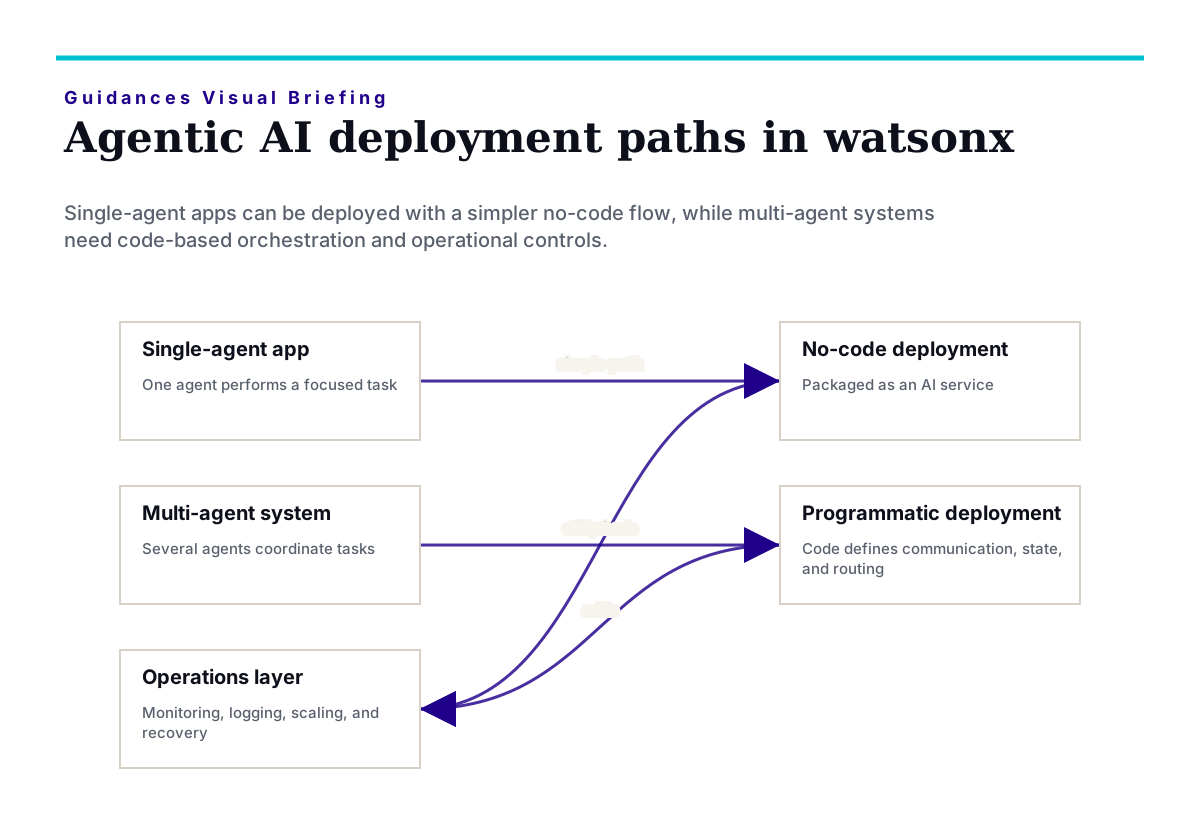
IBM’s watsonx documentation distinguishes a simpler deployment path for single agents from a more controlled, code-driven path for multi-agent systems.
更正与安全
See a factual, privacy, rights, or safety issue? Review the corrections process or contact Guidances before relying on this article for important decisions.