政策
持續中 · 6 次更新Fact 8/10EU AI 法案:分析其對全球 AI 產業的市場影響與企業估值敏感度
文章語言
繁體中文
歐盟 AI 法案正進入分階段執行,為全球 AI 產業建立新的監管環境。此框架預期將影響大型科技公司的營運成本、研發策略與市場進入條件,進而牽動受影響產業與 ETF 的估值。
Open article · no sign-in required
来源与披露
The article accurately presents the EU AI Act as the world's first comprehensive AI legal framework with risk-based classification and phased enforcement. All major factual claims are well-supported by official EU sources. The article correctly identifies the phased timeline, risk-based approach, and global implications. Minor deduction because some specific prohibited practices mentioned (social credit systems, real-time biometric surveillance) are stated as 'reportedly includes' without direct verification in the provided context, though these are accurate based on the Act's content. The compliance timeline details and enforcement dates are precisely correct.
Market lens
AI governance becomes an operating checklist buyers can audit
The market effect depends on whether policy language turns into required logs, evaluations, incident-response records, and launch gates.
Impact path
Policy memo → ops checklist
Signals to watch
- Draft rules specifying retention or audit evidence
- Enterprise RFPs requiring AI operation logs
- Product launches centered on governance workflows
Verification schedule
D+1 · Jun 7
Do rules move from principles into required artifacts?
D+3 · Jun 9
Do RFPs ask for evidence before model benchmarks?
D+7 · Jun 13
Do vendors ship audit workflows as core product?
Informational context only — not investment, legal, tax, or financial advice.
歐盟的人工智慧(AI)法案正作為全球首部全面性的 AI 法律框架進入分階段執行。該法案依風險程度對 AI 系統進行分類,禁止若干高風險做法,並要求企業依階段完成合規時程。預期這將帶動在歐盟市場營運或運用 AI 技術的全球企業,在營運與投資策略上出現調整。
主要受影響公司與產業曝險:
- 全球科技巨頭: Alphabet(GOOGL)、Microsoft(MSFT)、Amazon(AMZN)、Meta(META)與 NVIDIA(NVDA)等積極投入 AI 開發與部署的公司,可能需要投入可觀資源以確保符合監管要求。以雲端為基礎的 AI 服務供應商與大型語言模型(LLM)開發商,受到的影響尤為明顯。
- 產業別曝險: 醫療保健、自動駕駛(例如 Tesla(TSLA))、金融服務與工業自動化(例如 Siemens(SIEGY))等領域中的高風險 AI 系統,將面臨嚴格的符合性評估與人類監督要求。軟體與服務公司(例如 SAP(SAP)、IBM(IBM))則必須檢視其 AI 解決方案的合規性。
- 半導體: AI 發展速度或方向的變化,可能間接影響長期 AI 晶片需求。
估值敏感度與風險因素:
- 合規成本: 企業必須為 AI 系統的風險分類、文件編製、符合性評估與內部流程調整配置額外資源,這可能對短期利潤率形成壓力。
- 研發與創新限制: 某些高風險 AI 領域的開發可能延後或重新排序,進而影響長期成長動能。
- 市場進入: 進入歐盟市場需符合該法案要求,因此未符合規定的實體可能面臨市場進入限制。
- 罰則: 不符合規定者可能面臨最高達全球年度營業額 7% 或 3,500 萬歐元(以較高者為準)的罰款,財務風險因而上升。
ETF 與韓國企業影響:
- 全球 AI ETF: BOTZ、AIQ 與 ROBO 等聚焦全球 AI 的 ETF,將暴露於其底層科技持股所承擔的監管風險。XLK 與 QQQ 等較廣泛的科技 ETF 也可能受到間接影響。
- 韓國企業與 ETF: 具有歐盟市場曝險或積極進行 AI 開發的韓國企業,包括 Samsung Electronics(005930.KS)、Naver(035420.KS)與 Kakao(035720.KS),可能受到該法案的間接影響。KODEX AI 與 TIGER AI 等韓國本土 AI 相關 ETF,也可能對全球 AI 市場格局的變化作出反應。
Want follow-up alerts? Subscribe by email after reading the public article.
Market lens
AI governance becomes an operating checklist buyers can audit
The market effect depends on whether policy language turns into required logs, evaluations, incident-response records, and launch gates.
Impact path
Policy memo → ops checklist
Signals to watch
- Draft rules specifying retention or audit evidence
- Enterprise RFPs requiring AI operation logs
- Product launches centered on governance workflows
Verification schedule
D+1 · Jun 7
Do rules move from principles into required artifacts?
D+3 · Jun 9
Do RFPs ask for evidence before model benchmarks?
D+7 · Jun 13
Do vendors ship audit workflows as core product?
Informational context only — not investment, legal, tax, or financial advice.
視覺簡報
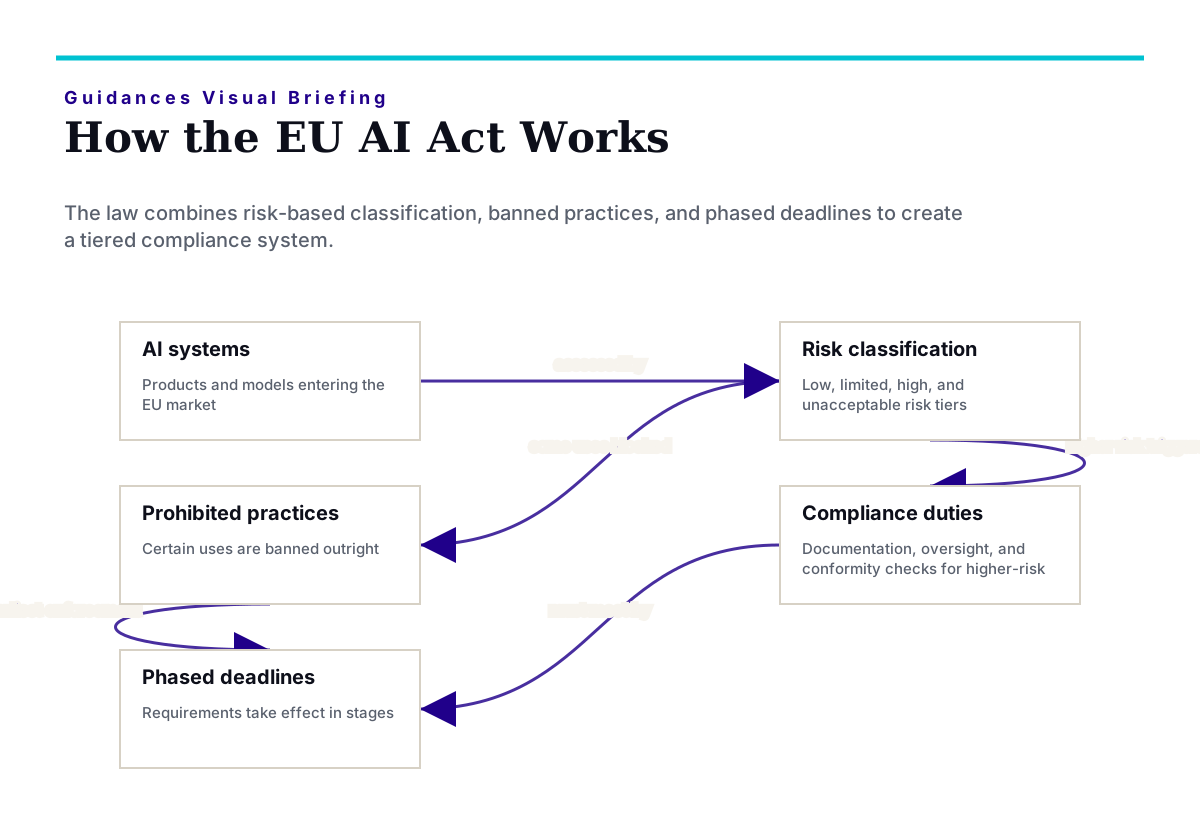
A simplified view of the EU AI Act's tiered structure and rollout.
更正与安全
See a factual, privacy, rights, or safety issue? Review the corrections process or contact Guidances before relying on this article for important decisions.