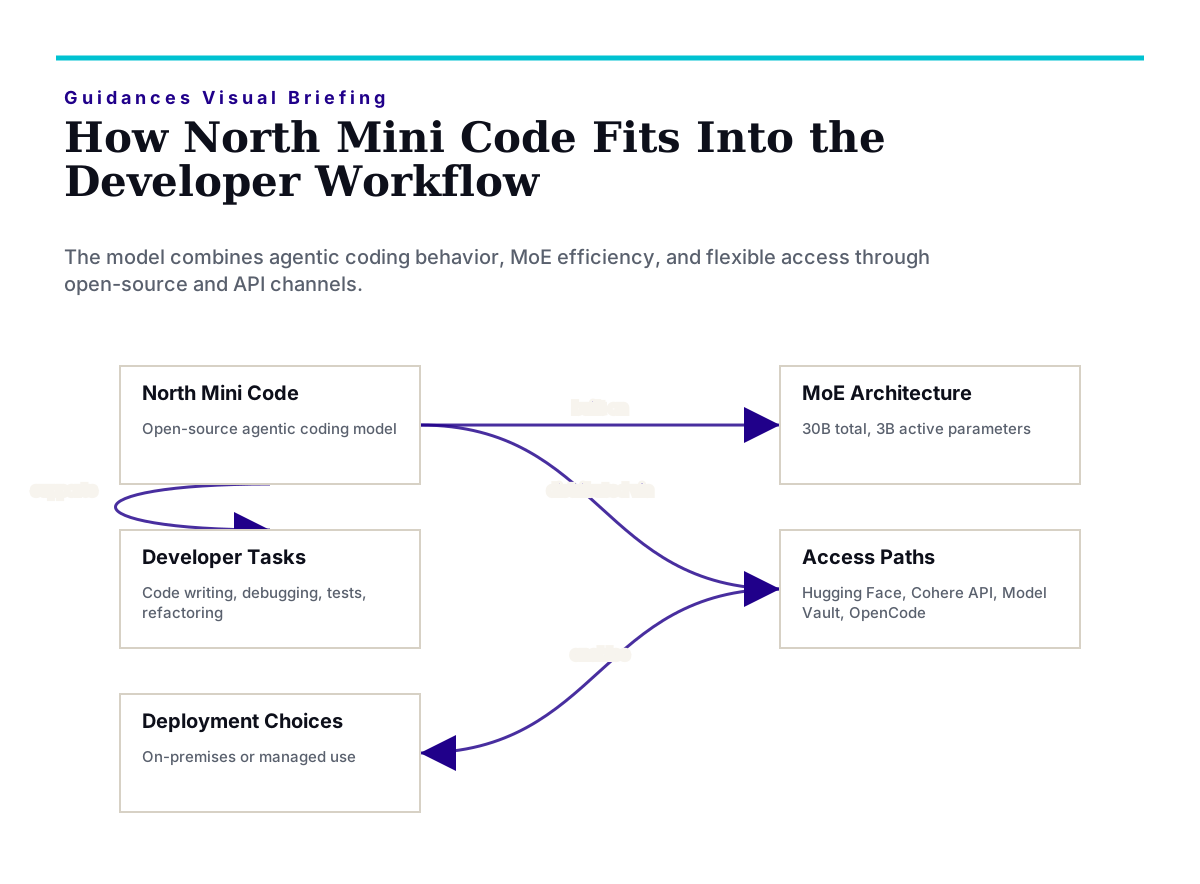
Cohere has introduced North Mini Code, an open-source coding model for the developer community. The model is presented as the first release in Cohere's next-generation model lineup.
Model Architecture and Deployment
North Mini Code is built on a Mixture-of-Experts (MoE) architecture, with a total of 30 billion parameters and 3 billion active during inference. Cohere has released the model under the Apache 2.0 license. Developers can access it through Hugging Face for model downloads or through Cohere's API. Cohere also says the model is available through its Model Vault and OpenCode platforms.
Understanding Agentic Coding Models
Cohere describes North Mini Code as an "agentic coding model." In general, agentic systems break complex tasks into multiple steps, use tools, and decide next actions based on intermediate results. In coding workflows, this can support tasks such as writing code, debugging, generating tests, refactoring, and documentation.
The AI coding tools market has seen growing interest in agent-based systems that go beyond basic autocomplete. Tools such as GitHub Copilot, Cursor, and Replit Ghostwriter have added related features, and Cohere's release adds another open-source option in this segment.
Launch of a Next-Generation Model Series
Cohere has positioned North Mini Code as the first product in its next-generation model series. This suggests the company may release additional models with similar architectural or design characteristics.
Cohere has previously offered enterprise-focused language models including Command, Embed, and Rerank. The release of an open-source coding model expands its presence in developer tools. The Apache 2.0 license may broaden access for startups and individual developers.
Competitive Landscape in Open-Source Coding Models
The open-source coding model space includes Meta's Code Llama, Mistral AI's Codestral, DeepSeek's DeepSeek-Coder, and Salesforce's CodeGen. These models differ in parameter scale, licensing terms, and support for specific languages and task types.
North Mini Code's 30B/3B MoE structure is designed to balance efficiency and capability. Its practical performance will depend on benchmark results and real-world use.
Deployment Infrastructure and Accessibility
Cohere offers multiple deployment channels. Direct download through Hugging Face supports teams that want on-premises deployment or customization. Cohere's API provides a managed service option for developers who prefer not to manage infrastructure. Model Vault and OpenCode are presented as tools for integrating and managing models within Cohere's ecosystem.
This deployment approach appears designed to accommodate different use cases and organization sizes. Startups can prototype through the API, while larger enterprises can deploy the model within their own infrastructure.
Public Information and Areas for Further Review
The information currently available does not include detailed performance metrics, training data composition, supported programming language coverage, or the specific implementation details of the agentic features. Cohere's official documentation and benchmark results will be needed to assess the model more fully.
MoE architectures are generally considered efficient, but practical use may require hardware-specific optimization. Execution stability and fine-tuning behavior across different deployment environments may affect adoption.