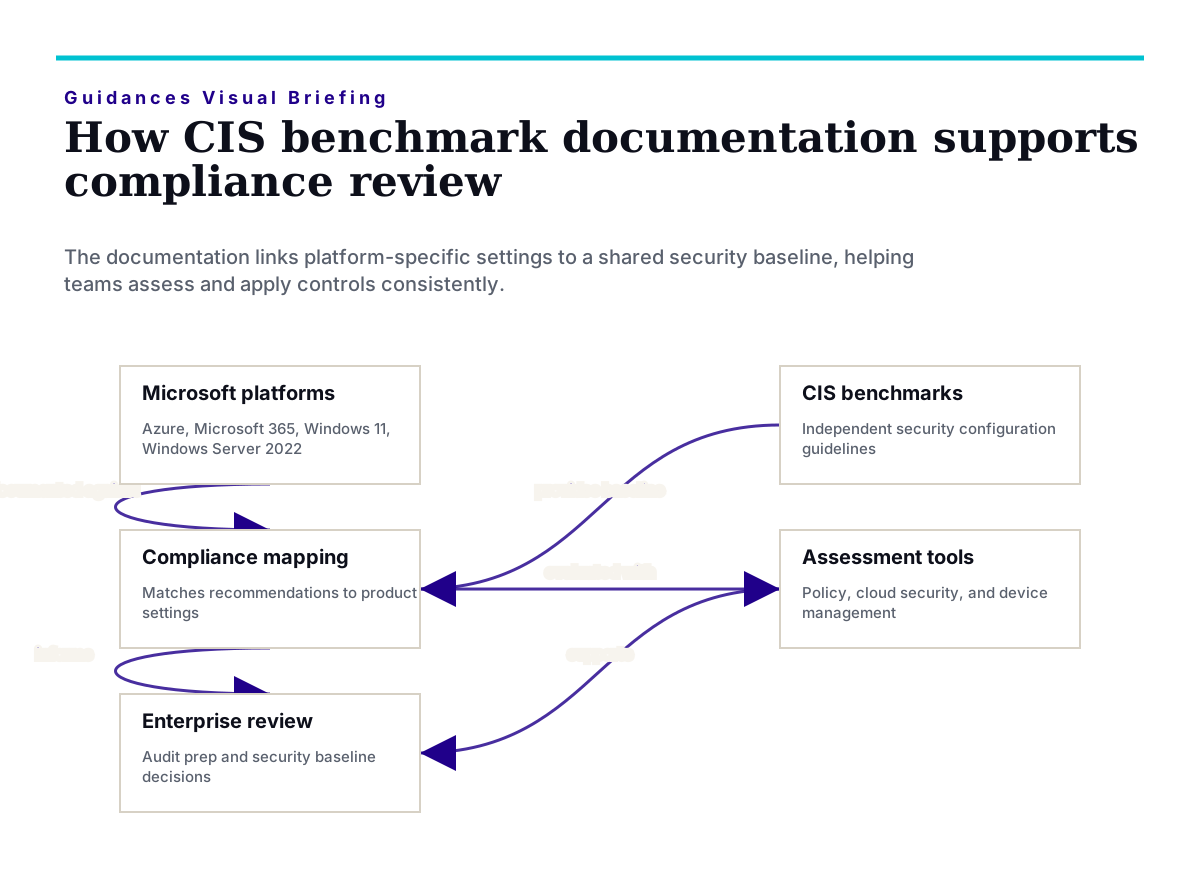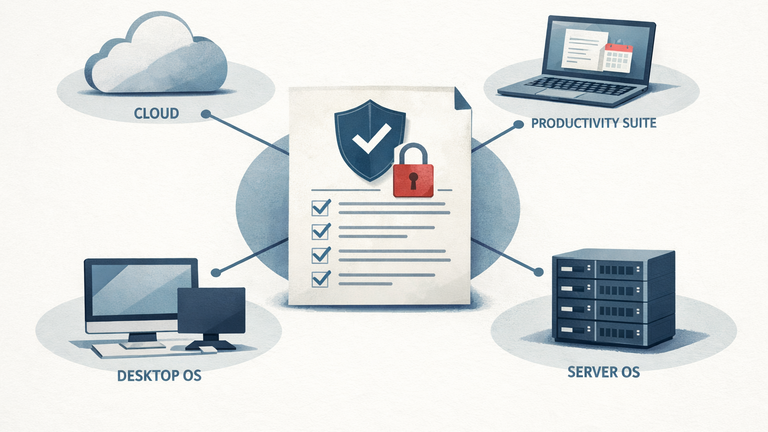
Microsoft has published compliance documentation for CIS (Center for Internet Security) Benchmarks covering its major cloud and operating system product lines. The documentation addresses Azure, Microsoft 365, Windows 11, and Windows Server 2022, and provides configuration baselines and security standards for each platform.
CIS Benchmarks are security configuration guidelines developed by the Center for Internet Security, a nonprofit security organization, and are used by government agencies, financial institutions, healthcare organizations, and enterprises as a reference for security configuration and regulatory compliance. These benchmarks offer recommendations across areas including system configuration, access control, logging, and network security.
Microsoft's documentation can help customers review security information and understand technical controls used in regulated environments. Azure and Microsoft 365 are widely used by enterprises, and related documentation may be used as a reference in security audits and compliance reviews.
For Azure, CIS Benchmarks cover security settings for infrastructure components including virtual machines, storage, networking, databases, and container services. For Microsoft 365, the focus includes user account management, authentication mechanisms, data loss prevention, and email security in SaaS environments.
CIS Benchmarks for Windows 11 and Windows Server 2022 establish standards for endpoint and server security. Enterprise IT administrators can use Group Policy, PowerShell scripts, or configuration management tools to automate and apply security settings consistently.
Microsoft's documentation explains how each recommendation maps to specific features or settings within its products. It also provides capabilities to assess and report CIS Benchmark compliance through tools such as Azure Policy, Microsoft Defender for Cloud, and Intune.
The release reflects a broader market trend in which cloud providers align with independent security frameworks to support customer compliance reviews and security transparency. CIS Benchmarks are referenced as technical control standards in frameworks including the U.S. NIST Cybersecurity Framework, Europe's NIS2 Directive, the financial industry's PCI DSS, and healthcare's HIPAA.
For developers and tech founders, the documentation can serve as a reference for considering security during product design and operations. In AI model training and deployment environments using Azure, it can be used to review security requirements related to data protection, model integrity, and access control. SaaS products integrating with Microsoft 365 can also use it as a reference for security configuration.
CIS Benchmarks are general security recommendations and may not apply uniformly to every organization's environment. Some recommendations may affect compatibility with legacy applications or user experience, so organizations may need to adjust implementation scope through risk assessment. The benchmarks are also updated regularly, requiring ongoing monitoring and review.
The documentation release may be viewed as a step toward greater cloud security transparency and accountability. Customers can use clear standards to review security configurations and prepare materials for regulatory and audit processes.
The publication also reflects an industry trend of major cloud providers aligning with independent security frameworks. Mapping between platform capabilities and recognized benchmarks can help customers review security controls. Microsoft's approach of documenting compliance and providing automated assessment tools can support ongoing security posture management.
For organizations in regulated sectors such as finance, healthcare, and critical infrastructure, the availability of detailed CIS Benchmark documentation may reduce the technical work involved in compliance review. Security teams can reference platform-specific recommendations when configuring cloud resources. This may also be useful in multi-cloud environments where consistent security baselines are needed across providers.
The documentation also has educational value, helping security professionals understand the background of specific configuration recommendations and the threats they address. This can help organizations review the balance between security requirements and operational or performance considerations.