What Happened
MIT Sloan Management Review has published an explainer on agentic AI that anchors its analysis in a spring 2025 survey. The survey found that 35% of respondents had already adopted AI agents in some operational capacity, while a further 44% indicated plans to deploy them in the near term. Taken together, those figures suggest that a substantial share of surveyed organizations were either running or actively preparing agentic AI workloads at the time of the survey — a pace of enterprise uptake that compresses the typical technology adoption curve considerably.
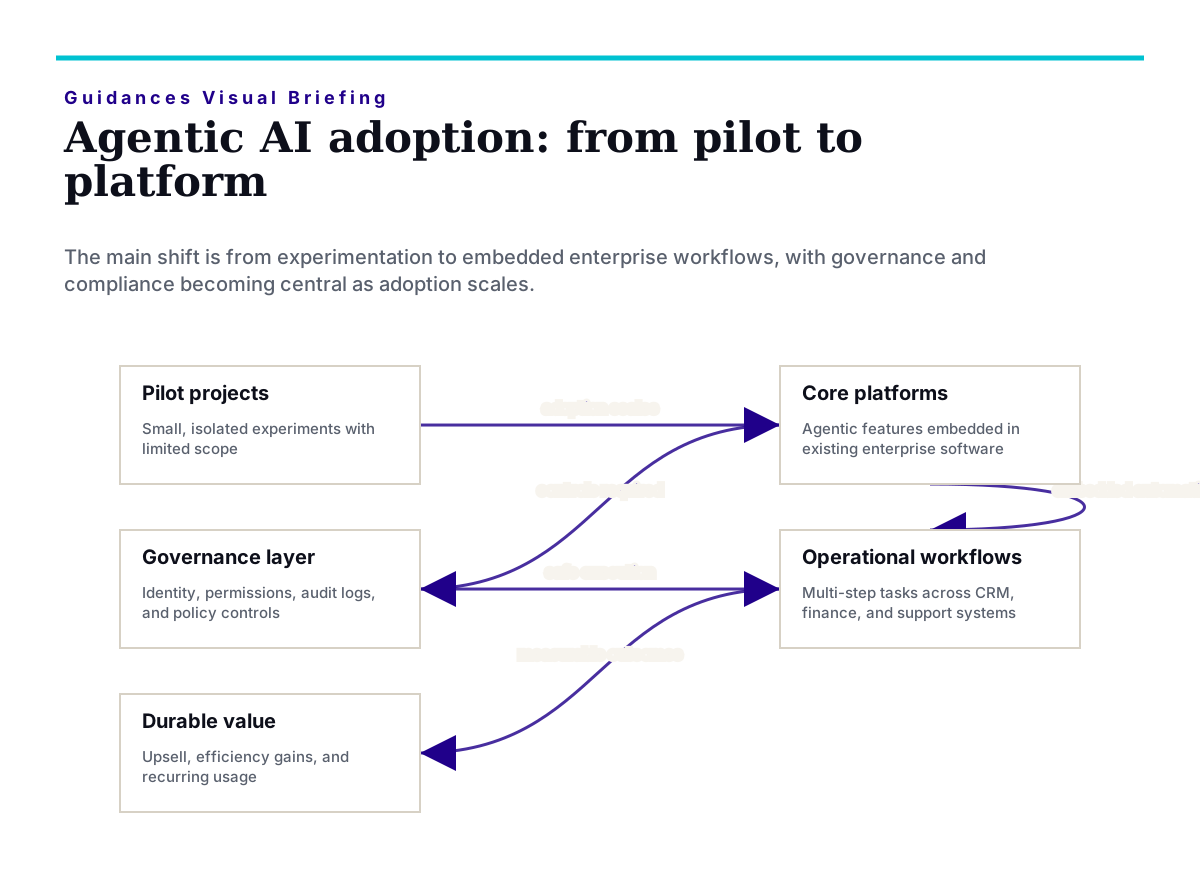
The MIT Sloan piece also identifies a structural shift in how agentic AI reaches enterprises: major software vendors — specifically Microsoft, Salesforce, Google, and IBM — are embedding agentic capabilities directly into their existing platforms rather than leaving deployment to standalone point solutions. That embedding strategy may affect how quickly agentic AI scales, who captures the economic value, and what governance challenges emerge.
The source page date was not independently verified by Guidances; the article was collected on June 16, 2026, and the survey data cited is attributed to spring 2025. Readers should treat the survey figures as a snapshot of sentiment from that period rather than a real-time measure.
Why the Market Cares
The transition from experimental AI pilots to platform-embedded agentic workflows is not merely a product-feature story. It is a structural shift in enterprise software economics. When agentic AI is bundled into platforms that organizations already pay for — Microsoft 365 Copilot, Salesforce Agentforce, Google Workspace, IBM watsonx — the incremental adoption friction drops sharply. Procurement cycles may shorten. IT departments may face fewer standalone vendor evaluations. And the value capture may shift toward the platform incumbents.
For Microsoft specifically, the scale of this opportunity is visible in its financial profile. The company reported annual revenue of $281.7B and year-over-year revenue growth of +14.9%, with a TTM operating margin of +46.8% — figures that reflect the leverage already embedded in its software and cloud business before agentic AI becomes a meaningful revenue line. Its market capitalization stands at $2.62T, a scale that reflects investor expectations of sustained platform expansion. The agentic AI embedding strategy, if it drives incremental seat upgrades or consumption-based billing growth, would flow through the same high-margin cloud and productivity segments that already underpin those metrics.
The broader market implication is that enterprise software incumbents with large installed bases may be structurally advantaged in the agentic AI transition. They do not need to win new customers to monetize agentic capabilities — they can convert existing customers to higher-tier plans or consumption-based pricing. That is a different competitive dynamic than the one that governed the initial generative AI wave, where new entrants could compete on model quality alone.
Technology and Policy Link
Agentic AI differs from earlier AI deployments in one critical dimension: autonomy. An AI agent does not merely respond to a prompt — it plans, executes multi-step tasks, calls external tools or APIs, and in some configurations takes actions with real-world consequences such as sending emails, modifying records, or triggering transactions. That autonomy creates a new class of governance and liability questions that enterprises are still working through.
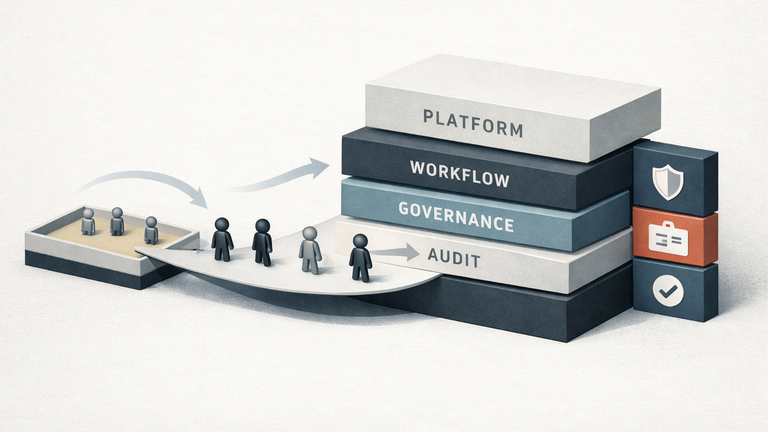
The platform-embedding strategy pursued by Microsoft, Salesforce, Google, and IBM places agentic capabilities inside existing enterprise security perimeters, identity frameworks, and audit trails. But it can also concentrate risk: when an agent operates inside a platform that touches payroll, CRM, or supply-chain data, a misconfigured or malfunctioning agent can propagate errors at machine speed across systems that were previously siloed.
From a policy standpoint, agentic AI sits at the intersection of several active regulatory conversations — the EU AI Act's risk-tiering framework, emerging U.S. federal guidance on automated decision-making, and sector-specific rules in financial services and healthcare. Enterprises deploying agents in regulated workflows may need to document decision chains in ways that current logging infrastructure may not fully support. This creates a secondary market opportunity for compliance tooling and observability platforms that can audit agent behavior at the task level.
Market Lens
Trigger: A spring 2025 MIT Sloan survey documenting rapid enterprise adoption of AI agents, combined with platform-level embedding by four major software vendors.
Mechanism: Platform incumbents may convert existing enterprise relationships into agentic AI upsell opportunities through bundled deployment, reducing adoption friction and potentially accelerating consumption-based revenue growth. Enterprises that have already standardized on Microsoft, Salesforce, Google, or IBM platforms may face lower switching costs to agentic workflows than to standalone agent vendors.
Affected sectors and companies: Enterprise software (Microsoft, Salesforce, Google parent Alphabet, IBM); cloud infrastructure providers that host agent workloads; compliance and observability tooling vendors; and, indirectly, the semiconductor and networking infrastructure that supports higher inference workloads as agent deployments scale.
Time horizon: The 44% near-term deployment figure from the spring 2025 survey suggests the bulk of initial enterprise rollouts may occur across 2025 and into 2026. The revenue recognition impact on platform vendors — particularly through seat upgrades and consumption billing — could appear in fiscal year 2025 and 2026 results.
Next check: Microsoft's next earnings disclosure is a key checkpoint. FMP data may flag a revenue estimate, but that figure could reflect a specific segment or period estimate rather than total company revenue, so readers should verify against official Microsoft IR materials. Salesforce and Alphabet earnings releases will also provide evidence of whether agentic AI features are translating into measurable seat or consumption growth. Official Microsoft SEC filings dated June 25, 2026, are available and represent the most current verified disclosure checkpoint.
This analysis is market context only, not investment advice. No buy, sell, or hold recommendation is expressed or implied.
Unverified link: The direct causal connection between the MIT Sloan survey figures and specific revenue line items at any named vendor has not been independently verified by Guidances. The survey data is attributed to spring 2025 and may not reflect current deployment rates.
What to Watch Next
Several concrete checkpoints will clarify whether the adoption curve documented in the MIT Sloan survey is translating into durable commercial outcomes:
Platform vendor earnings disclosures: Microsoft's Copilot and Azure AI segment commentary, Salesforce's Agentforce seat and consumption metrics, and Alphabet's Google Workspace AI disclosures will be the primary evidence base. Observers should look specifically for whether vendors are reporting agent-driven consumption growth separately from base cloud growth — a disclosure practice that is still inconsistent across the industry.
Governance and compliance tooling procurement: Enterprise procurement of agent observability, audit logging, and policy enforcement tools will be a leading indicator of whether organizations are moving from pilot to production at scale. Vendors in this space — including both established security platforms and newer agent-specific startups — are worth monitoring for contract announcements or funding rounds that signal enterprise demand.
Regulatory developments: The EU AI Act's implementation timeline and any U.S. federal guidance on automated decision-making in regulated sectors will set the compliance floor for agentic deployments. Enterprises in financial services, healthcare, and government contracting face the most immediate regulatory exposure and are likely to move more cautiously than the survey aggregate suggests.
Workforce and process redesign signals: The most durable value from agentic AI will come not from deploying agents on existing workflows but from redesigning processes around agent capabilities. Early evidence of this