IBM has released a guide on AI agents for 2026, presenting definitions and implementation methodologies for autonomous task-performing systems. The guide positions AI agents not as simple chatbots or automation scripts, but as systems capable of independently designing workflows and using diverse tools to execute complex tasks.
Conceptual Definition and Technical Scope of AI Agents
IBM's guide defines AI agents as goal-oriented, autonomous software systems, emphasizing that these systems can dynamically determine task sequences based on context rather than following predefined rules. This represents a distinction from traditional automation tools. Agents invoke and combine various tools—external APIs, databases, search engines, code execution environments—to complete complex tasks.
This definition appears to be an attempt to clarify technical boundaries amid widespread use of the term "agent" across the AI industry. As many vendors market simple prompt chains or function-calling capabilities as agents, IBM proposes a more rigorous standard by highlighting autonomy and tool-use capability as core elements.
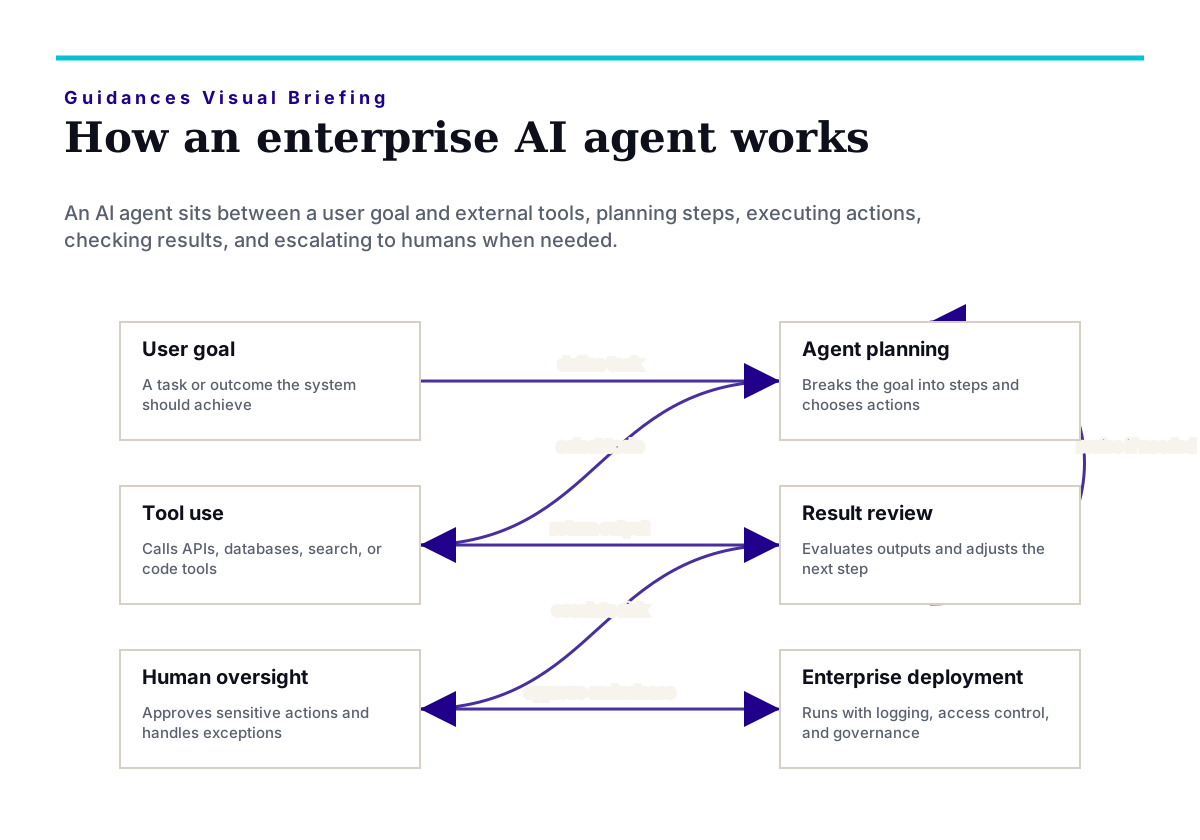
The guide specifies that agents must be capable of planning and executing workflows composed of multiple steps, going beyond performing single tasks. This includes the ability to evaluate intermediate results, modify plans as needed, and respond to exceptional situations. These characteristics position agents as complex problem-solving systems.
Practical Approaches to Workflow Design and Tool Integration
The guide includes explanatory materials on how AI agents design workflows. Agents analyze the steps required to achieve a given goal, determine which tools to use at each stage, evaluate intermediate results, and adjust subsequent actions accordingly. This process is implemented through a combination of large language model reasoning capabilities, function-calling mechanisms, and state management systems.
Tool-use capability is a critical factor determining agent practicality. IBM's guide addresses how agents integrate diverse tools including RESTful APIs, database queries, file system access, code interpreters, and external search services. This is essential for building agents that go beyond simple text generation to intervene in actual business processes, handle data, and interact with external systems.
The tutorial section appears to provide step-by-step instructions enabling developers to implement agents in practice. This likely includes code examples using IBM's Watsonx platform or open-source frameworks, architectural patterns, and deployment strategies. Developers can learn through these materials how to implement the cyclical process of planning, tool selection, execution, and result evaluation that forms the core of agent functionality.
A critical aspect of tool integration is that agents must understand the capabilities and constraints of each tool and select the appropriate tool in the right context. This involves not only providing clear descriptions and usage examples for tools, but also building feedback mechanisms that enable agents to interpret tool usage results and determine next steps.
Agent Deployment and Operational Considerations in Enterprise Environments
When deploying AI agents in enterprise settings, reliability, security, observability, and governance emerge as critical challenges. IBM's guide is expected to address these operational aspects, particularly focusing on methods to manage considerations that may arise when agents perform tasks autonomously.
Agent autonomy expands potential use cases. If agents use tools in unexpected ways or perform critical tasks based on flawed reasoning, they can affect business operations. Therefore, mechanisms are needed to monitor agent behavior, require human approval for certain tasks, and enable recovery from failures.
From a security perspective, it is essential to limit the scope of tools and data agents can access and apply authentication and authorization management. Without proper access controls when agents call external APIs or handle databases, risks of data leakage or unauthorized modifications can exist. This means applying the principle of least privilege from the agent design stage and implementing logging and audit trails for each tool invocation.
Observability is essential for understanding agent decision-making processes and diagnosing problems. It must be possible to track what information agents based their decisions on, which tools they used, and what results they obtained at each stage. This makes agent behavior explainable and helps identify causes when errors occur.
From a governance perspective, it is necessary to ensure that agents comply with organizational policies and regulations. This includes defining the scope of tasks agents can perform, establishing rules for handling sensitive data, and verifying that agent behavior meets legal and ethical standards.
Current State of the AI Agent Market and IBM's Position
As of 2026, AI agents represent one of the prominent areas in the software industry. Major AI research organizations including OpenAI, Anthropic, and Google are integrating agent capabilities into their models, while open-source frameworks such as LangChain, AutoGPT, and CrewAI provide tools for developers to build agents.
IBM has extensive experience in the enterprise AI market and has delivered enterprise-grade AI solutions through its Watsonx platform. This guide appears to be part of IBM's strategy to integrate agent technology into its product portfolio and provide practical implementation pathways for enterprise customers.
IBM's approach is differentiated by its focus on enterprise requirements. While many open-source frameworks support rapid prototyping and experimentation, IBM emphasizes stability, scalability, and regulatory compliance in production environments. This is particularly important in industries such as finance, healthcare, and manufacturing that require high reliability and security.
IBM also faces challenges. The agent framework market is already competitive, and many developers prefer open-source tools. For IBM to deliver differentiated value, it must leverage strengths in areas such as enterprise governance, regulatory compliance, and legacy system integration. Additionally, building an ecosystem through collaboration with the developer community and ensuring interoperability with open-source tools is important.
Technical Uncertainty and the Need for Standardization
AI agent technology continues to evolve rapidly, with many technical challenges remaining unresolved. Agent reasoning capabilities depend heavily on the performance of underlying language models, and error rates remain a factor in complex tasks. Additionally, standardized benchmarks for evaluating the efficiency and accuracy of agent-generated workflows are lacking.
Tool integration approaches are also not yet standardized. Each framework and platform uses different tool definition formats and invocation mechanisms, limiting agent portability. While industry-wide standardization efforts are needed, vendors currently pursue independent approaches.
How IBM's guide addresses this uncertainty is an important observation point. Developer community response will vary depending on whether the guide presents approaches tied to specific technology stacks or emphasizes more general, interoperable principles.
Research to improve agent reliability is also underway. This includes developing mechanisms that enable agents to recognize their capabilities and limitations, request human assistance in uncertain situations, and detect and correct mistakes. Additionally, the ability to explain and justify agent behavior is important for building user trust.
Practical Implications for Developers and Enterprises
IBM's guide suggests that AI agent technology is moving beyond the experimental stage into practical deployment. Developers and enterprises can now leverage concrete methodologies and tools for building and deploying agents. However, building successful agent systems requires consideration not only of technical implementation but also of organizational processes and culture.
Agents should be designed not to replace human work but as tools that collaborate with humans to produce better outcomes. This means agents must understand human intent, request help at appropriate times, and learn from human feedback. Organizations must also educate employees to effectively utilize agents and develop collaboration methods with agents.
The guide's release increases accessibility to AI agent technology and helps more organizations experiment with and adopt this technology. However, each organization must carefully evaluate how to utilize agent technology considering its specific requirements and constraints. This means comprehensive evaluation including not only technical feasibility but also business value, risk management, and long-term strategic fit.