What happened
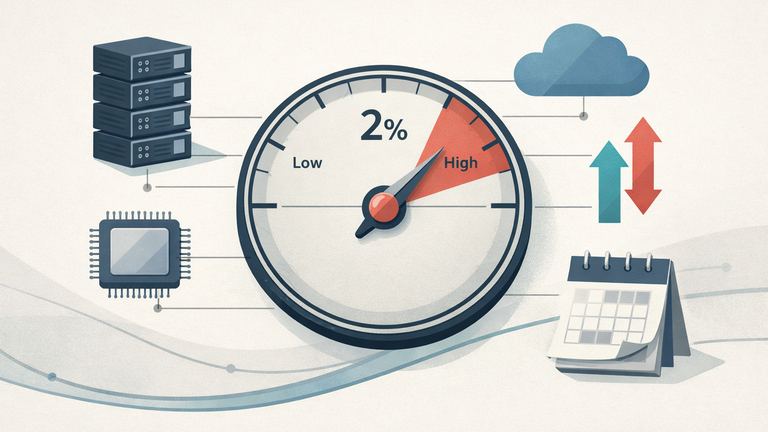
The Federal Reserve’s official FAQ defines inflation as a broad and persistent rise in the overall price level of goods and services. It also states that the Federal Open Market Committee uses the Personal Consumption Expenditures price index as the main reference for its longer-run 2% inflation objective, while also monitoring the Consumer Price Index, the Producer Price Index, and core inflation measures. The source is a primary official policy reference on federalreserve.gov. The search metadata did not provide a machine-readable publication date, so this article treats it as an enduring policy framework rather than a newly published development.
That distinction matters. The source does not deliver a fresh inflation print, a new rate decision, or a revised forecast. What it does provide is the policy lens through which the market interprets those future releases. For technology operators and market-aware readers, that lens is consequential because it shapes the cost of capital, the discount rate applied to future earnings, and the financing conditions behind AI infrastructure, semiconductor supply chains, and cloud expansion.
Why the market cares
Inflation is not only a macro statistic. In public markets it is a transmission mechanism. When inflation runs above the Fed’s objective, policy tends to remain tighter for longer, and that affects Treasury yields, equity discount rates, and the valuation of long-duration assets. Technology companies, especially those whose cash flows are expected further in the future, are more exposed to that discount-rate effect than businesses with near-term cash generation.
The same logic extends beyond listed equities. AI data centers, custom silicon programs, networking upgrades, and large-scale cloud contracts all depend on capital budgeting assumptions. If the cost of money rises, the hurdle rate for marginal projects rises with it. If inflation cools and policy eases, the financing backdrop can become more accommodating. The source therefore matters not because it changes the market by itself, but because it defines the framework that can change the market once new data arrive.
The Fed’s use of multiple indicators also matters. PCE is the policy anchor, but CPI can capture household-facing price pressure, and PPI can reveal upstream cost changes in hardware, components, and industrial inputs. For technology firms, that combination is useful because it links consumer demand, labor costs, and supply-chain pricing into one policy conversation.
Tech / policy link
The policy link is clearest in three areas.
First, semiconductor and server supply chains. Producer prices for chips, packaging, racks, power systems, and networking gear can influence the cost base for cloud providers and AI infrastructure builders. If upstream prices rise, margin pressure can appear before it is visible in customer pricing.
Second, labor-intensive technology services. CPI components tied to services and shelter can reflect broader wage and cost pressure in software engineering, operations, and data-center staffing. That matters for firms scaling headcount alongside infrastructure.
Third, capital-intensive AI buildouts. GPU clusters, power delivery, cooling systems, and high-bandwidth networking require multi-year commitments. Those commitments are sensitive to the rate environment because the economics depend on future utilization, future pricing, and the discount rate used in internal return calculations. A policy framework centered on 2% inflation is therefore not abstract to builders; it is part of the financial architecture of the AI cycle.
Market Lens
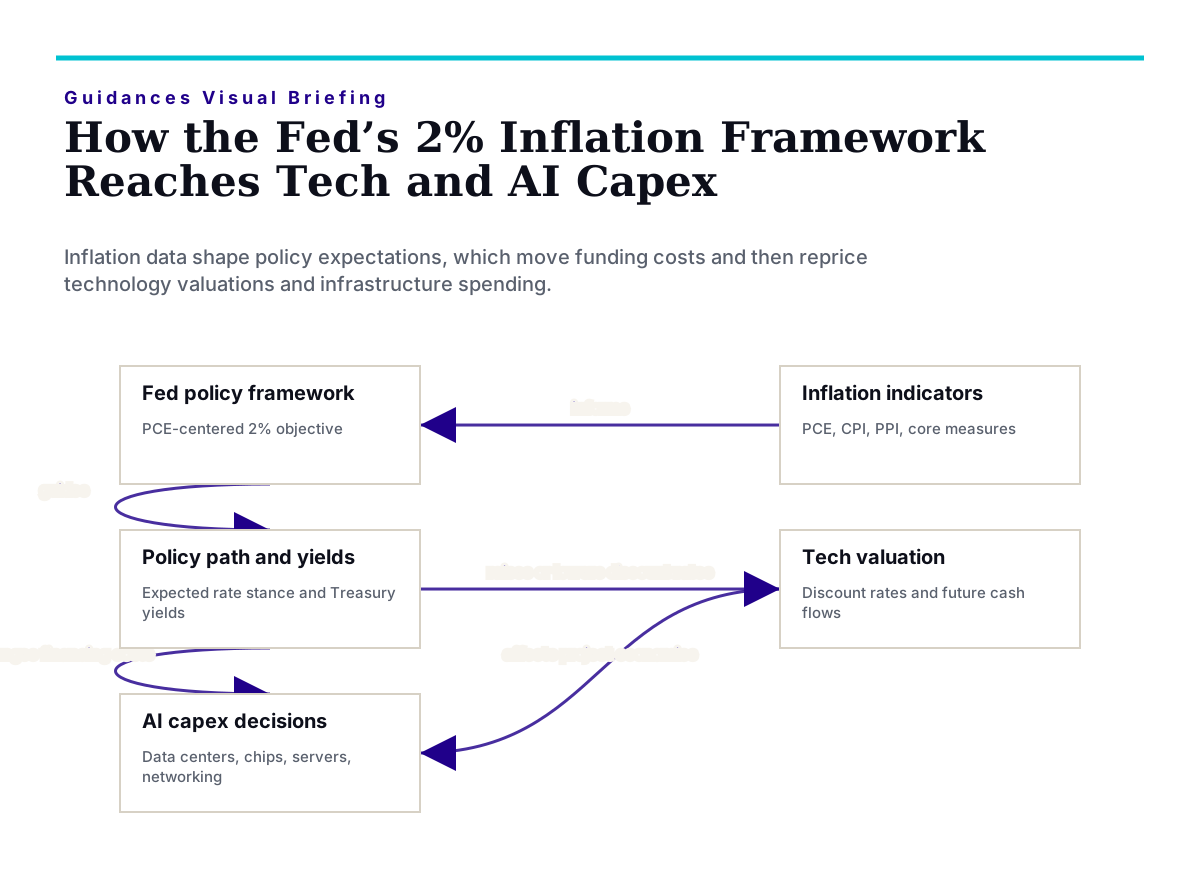
Trigger: The Fed’s standing 2% PCE objective and its practice of watching PCE, CPI, PPI, and core measures.
Mechanism: Inflation data influence the expected policy path → the policy path shapes Treasury yields and funding costs → funding costs affect equity discount rates and capex decisions → technology valuations and infrastructure spending are repriced accordingly.
Affected assets / sectors: Growth equities, cloud computing, semiconductor makers, server and networking equipment suppliers, AI infrastructure names, and venture-backed technology companies. Broad technology indexes and AI-themed funds are exposed through duration sensitivity. The source does not support a specific ticker reaction, so none is asserted here.
Time horizon: The policy effect is medium term, typically over several months to more than a year, while market pricing can adjust immediately around each inflation release and FOMC meeting.
Next check: The next concrete checks are the monthly PCE release from the Bureau of Economic Analysis, the monthly CPI release from the Bureau of Labor Statistics, and the next FOMC statement and Summary of Economic Projections. For builders and investors alike, quarterly capex guidance from hyperscalers is also a practical read on how the rate environment is affecting real spending plans.
This is market context only, not investment advice.
What to watch next
The most useful near-term questions are operational rather than rhetorical. Is core PCE moving closer to the Fed’s objective, or remaining sticky? Are services prices still elevated relative to goods prices? Is PPI in semiconductor and server-related categories easing, or is upstream cost pressure still present? Do FOMC communications continue to emphasize patience, or do they signal a change in the policy stance? And do major cloud and AI infrastructure operators revise capex guidance in a way that suggests a different cost-of-capital assumption?
Those checks matter because they determine whether the policy framework in this source remains merely descriptive or becomes a live market input. The source itself does not answer that question. It only tells readers what the Fed is watching.
Uncertainty and constraints
The source is official, but it is also limited. It does not include a publication date in the collected metadata, and it does not provide current inflation readings. It also does not specify the next policy move. Any market interpretation must therefore remain conditional. The relationship between inflation, rates, and technology valuations is well established historically, but the magnitude of any future reaction will depend on the actual data path, the Fed’s response, and broader risk appetite.
For that reason, this article avoids unsupported claims about specific stocks, price moves, or near-term outcomes. The useful takeaway is narrower and more durable: the Fed’s inflation framework is one of the main channels through which macro data become relevant to technology capital allocation.