What Happened
A June 18, 2026 Ars Technica report says Taiwan is trying to make more military drones for defense as pressure from China remains a central security concern. The source snippet says Taiwan’s government aims to boost domestic production of military drones, Taiwanese citizens are signing up for drone flight training, and Taiwanese companies are forming international partnerships to sell more drones to the US military and other overseas buyers. It also identifies Thunder Tiger as one Taiwanese company that has pitched drone technology and components to the US military and European buyers.
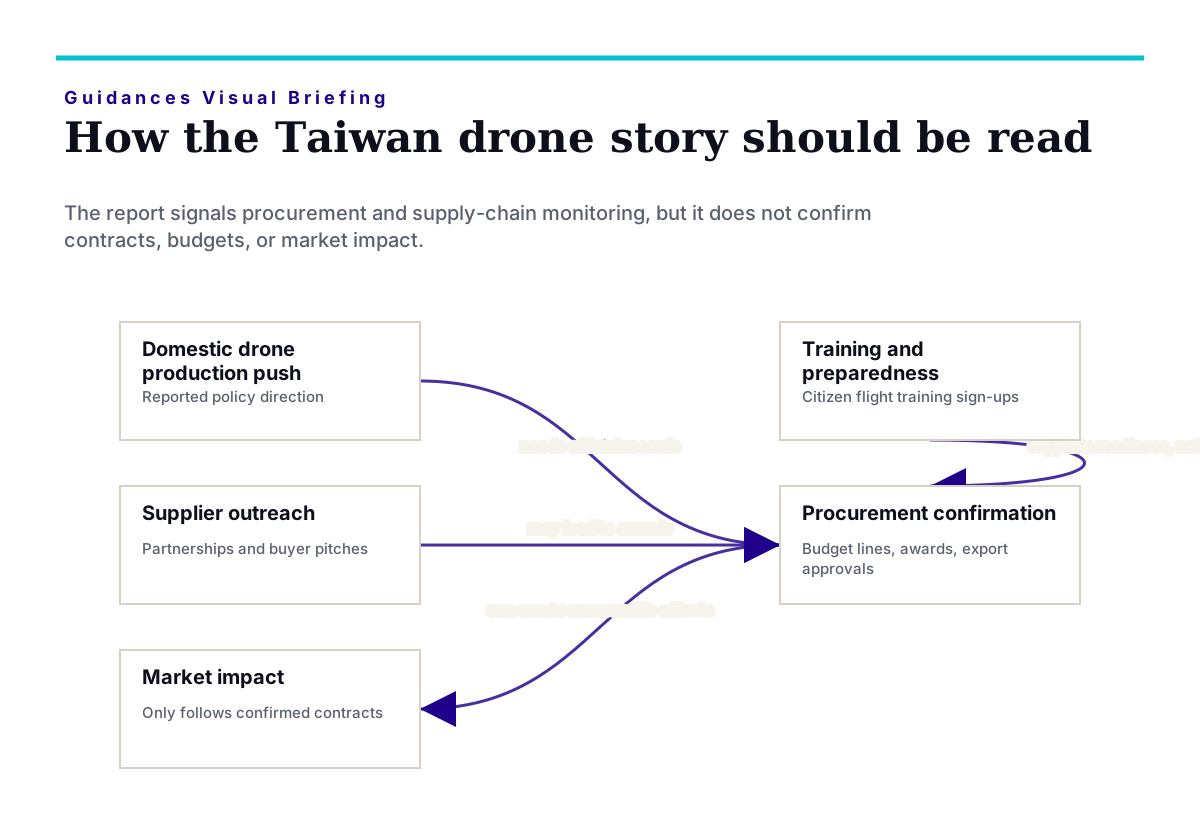
That is enough to treat the story as a defense-industrial watch item. It is not enough to treat it as a confirmed procurement cycle with visible contract values. The available source context does not provide a government budget table, a signed Pentagon contract, a European tender award, a supplier revenue target, or an official inventory count. Any number cited in secondary reporting should therefore be handled as reported context rather than as an official Taiwanese military figure.
Why the Market Cares
The market relevance comes from the type of supply chain involved, not from a reported stock move or a disclosed contract. Military drones sit at the intersection of airframes, sensors, communications modules, battery systems, edge-computing hardware, software, and defense qualification. Taiwan’s broader electronics and semiconductor ecosystem makes the subject relevant to technology and defense-supply-chain coverage, but the source does not establish that particular chipmakers, assemblers, or component suppliers will receive orders.
For investors, operators, and policy watchers, the correct framing is therefore conditional. If Taiwan’s drone plans turn into formal procurement lines, named supplier awards, export approvals, or overseas contracts, the story could become material for defense-technology manufacturers and component vendors. Until those documents appear, the fact pattern remains a sourcing and policy signal rather than a measurable market outcome.
The same caution applies to overseas demand. The source says Taiwanese companies are forming partnerships and pitching to the US military and other buyers. A pitch is not a contract, and a partnership discussion is not the same as revenue recognition. The important next step is whether any buyer publishes a contract notice, qualification decision, or procurement framework that names a Taiwanese supplier and discloses scope.
Technology and Policy Linkage
Drone manufacturing is a dual-use technology problem. A military drone program can require flight-control software, resilient communications, sensors, secure component sourcing, and export-control review. Those requirements explain why Taiwan’s drone activity belongs in the same monitoring lane as semiconductors, robotics, edge AI, and defense procurement.
The source snippet, however, does not prove a specific semiconductor bottleneck or a near-term chip-order cycle. It supports a narrower observation: if Taiwan is trying to increase domestic drone production, the supporting hardware and software stack becomes a useful place to watch for follow-on evidence. That evidence should come from official budget documents, company disclosures, procurement records, export-license notices, or credible primary statements from relevant agencies.
Civilian training also should be framed carefully. The source says citizens are signing up for drone flight training. That confirms operator-interest and preparedness activity; it does not by itself prove a measurable labor-market shift, a data advantage, or a long-term ecosystem benefit. Those conclusions would require separate data on participants, program scale, certification outcomes, or employment pathways.
Market Lens
Trigger: Taiwan is reported to be expanding domestic military-drone production while companies including Thunder Tiger seek US and overseas buyers.
Confirmed from the available context: domestic-production ambition, citizen drone-training activity, international partnership efforts, and company outreach to US and European buyers.
Not confirmed: budget totals, official drone inventory counts, signed US or European contracts, supplier revenue effects, semiconductor order volumes, stock-price impact, or a lasting supplier edge for Taiwanese manufacturers.
Sector watch: defense technology, dual-use electronics, secure communications, sensors, batteries, edge computing, and procurement compliance. These are watch areas, not confirmed beneficiaries.
Market interpretation: the article is a watch note for procurement and supply-chain visibility. It should not be read as portfolio advice, valuation guidance, return forecasting, or a company-fundamentals call.
What to Watch Next
The first check is Taiwan’s public defense-budget process. A named line item for domestic drone procurement would be stronger evidence than a broad report about spending plans. The second check is whether Taiwan’s Ministry of National Defense, Ministry of Economic Affairs, or another official body publishes details on production targets, export rules, or supplier qualification. The third check is overseas procurement: US Department of Defense notices, Foreign Military Sales material, or European defense-ministry tenders that identify Taiwanese drone systems or components.
Company-level disclosures matter as well. If Thunder Tiger or another named supplier announces a contract, production target, certification step, or partner agreement with economic terms, the story can be reassessed with firmer market context. Without those details, the safest reading is that Taiwan’s drone push is becoming strategically important but remains early as a public-market signal.
Uncertainty and Constraints
The available source is snippet-only and does not provide the full evidentiary base needed for a definitive procurement article. It indicates direction, not scale. It identifies outreach, not award outcomes. It references defense need, not official inventory verification. It suggests possible business relevance, not confirmed financial impact.
That distinction matters because defense-technology narratives can easily move faster than the records that support them. Taiwan’s security environment gives the topic strategic weight, but Guidances should keep the published claim boundary narrow: reported production push, reported company outreach, reported training interest, and a clear list of missing confirmations.