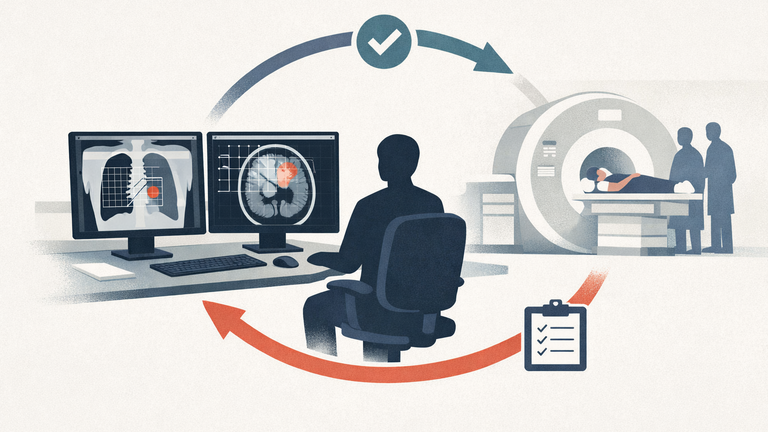
Stanford University's Center for Artificial Intelligence in Medicine & Imaging has announced it is conducting prospective real-time clinical validation studies of AI models developed for medical imaging. This research represents a step in evaluating how algorithms developed in controlled laboratory settings perform in actual clinical practice, and it may contribute evidence used in regulatory review and healthcare deployment.
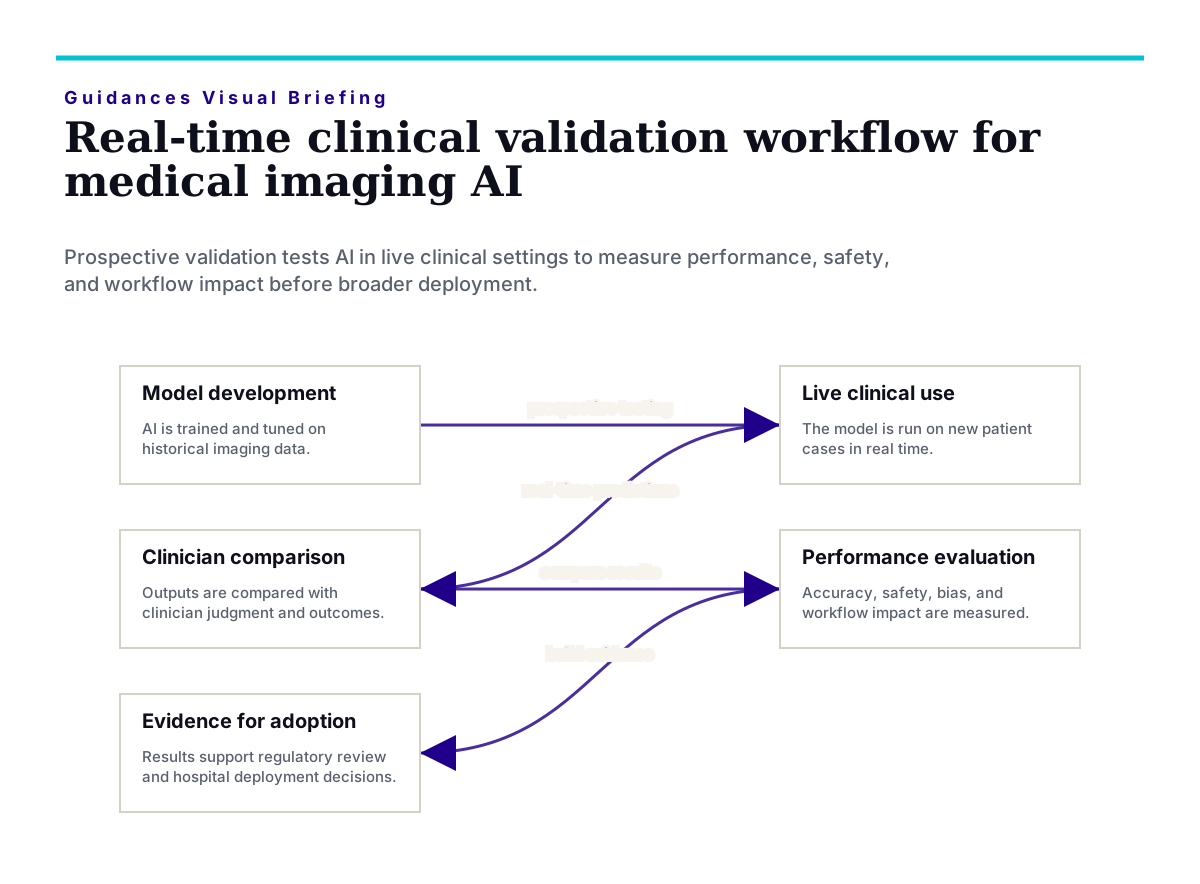
Medical imaging AI has advanced rapidly in recent years, with numerous models first validated through retrospective studies based on historical datasets. However, actual clinical environments introduce variables distinct from laboratory conditions, including differences in data quality, patient diversity, workflow integration, and time constraints. Prospective real-time validation is a methodology designed to evaluate the performance, safety, and clinical utility of AI models as they are used in real time during patient care.
Stanford's approach reflects the growing emphasis on evidence-based validation in the medical AI field. Regulatory agencies, including the U.S. Food and Drug Administration (FDA), may require clinical validation data for AI software classified as medical devices, and prospective study results can be an important part of the review process for high-risk applications that assist diagnosis or influence treatment decisions.
Medical imaging is one of the most active areas for AI application. AI models are being developed across a wide range of modalities, including radiological imaging, pathology slides, ophthalmic imaging, and cardiac ultrasound, with some already entering commercialization. Actual clinical adoption, however, can vary depending on validation methods, workflow integration, and clinician experience.
Prospective clinical validation is one way to help address this gap. The methodology involves deploying AI models in real clinical environments, generating predictions in real time on new patient data, and comparing those results with clinical outcomes and medical professionals' judgments. In addition to technical accuracy, the process measures sensitivity, specificity, positive predictive value, and negative predictive value, while also examining error patterns, bias, and generalization capability.
Stanford's research also focuses on assessing the clinical impact of AI models. Beyond technical accuracy, it examines whether AI tools may affect diagnostic time, diagnostic accuracy, and treatment decision processes. These findings can be relevant to healthcare institutions' adoption reviews and insurance reimbursement discussions.
For medical AI developers and startups, such validation studies offer several takeaways. First, it can be helpful to establish clinical validation strategies early in product development. Performance on retrospective datasets alone may not be sufficient for evaluation in real clinical settings, so prospective validation planning is important. Second, building collaborative relationships with healthcare institutions matters. Prospective studies require hospital infrastructure, clinician participation, and ethical approval, making partnerships with academic medical centers potentially useful.
Third, developers need to understand regulatory pathways. Options such as FDA 510(k), De Novo classification, and pre-certification programs exist, and each may require different levels of clinical evidence. Prospective validation data can be especially important for novel indications or high-risk applications. Fourth, data quality and diversity remain important. Real-world clinical data can be noisier and more variable than laboratory data, so model robustness is a key consideration.
Validation studies by major academic institutions such as Stanford can also help shape standards in the medical AI field. By offering reference points for study design, evaluation metrics, and reporting methods, such work can contribute to higher validation quality across the industry and support trust among regulators and the medical community. This can be viewed as part of a broader trend affecting the maturity of the medical AI ecosystem.
Prospective clinical validation can be time- and resource-intensive. Study design, ethical approval, patient recruitment, data collection, analysis, and publication can take months to years, and this process unfolds alongside a rapidly changing AI technology landscape. Validation may also reveal model limitations. Even so, clinical validation remains an important process for the responsible development and deployment of medical AI.
As the medical AI market grows, discussion of validation methodologies is expanding as well. Proposed approaches include validation of continuously learning models, multi-institutional validation, use of real-world evidence, and adaptive clinical trial designs. Stanford's research examines these methodological innovations while also assessing their practical feasibility in real clinical settings.