What Happened
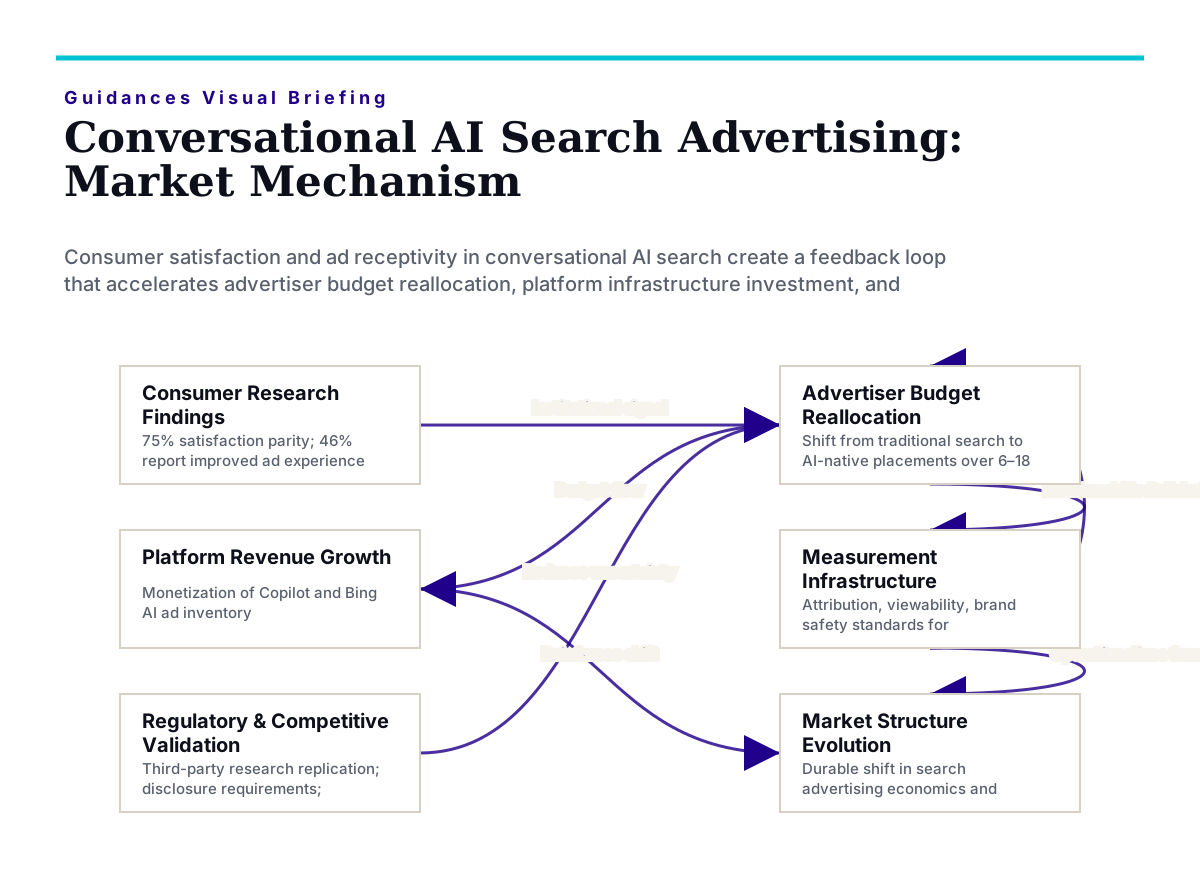
Microsoft Advertising and Publicis Groupe jointly released a research whitepaper on June 18, 2025, examining consumer attitudes toward conversational AI search and its viability as an advertising medium. The document, titled How to Get Ahead of Conversational AI Search, draws on survey data to surface three headline findings: 75% of users report equivalent or superior satisfaction with conversational AI search compared with traditional keyword-based search; 74% report enhanced decision-making when using conversational AI search; and 46% of consumers who notice ads within conversational AI search report that those ads improve their overall experience. The whitepaper is described as a collaboration between Microsoft Advertising and Publicis Groupe, one of the world's largest advertising holding companies.
The publication arrives at a moment when Microsoft is actively integrating its Copilot AI assistant into Bing and its broader advertising stack, and when the advertising industry is discussing how to monetize AI-driven search interfaces that do not always surface the same link-based inventory as conventional search engine results pages.
Why the Market Cares
Search advertising has historically been one of the most defensible and high-margin segments of the digital economy. The transition from link-list results to conversational, generative AI responses introduces changes in how ad inventory is created, priced, and measured. If conversational AI search commands user satisfaction levels comparable to traditional search—as this whitepaper suggests—the question for advertisers and platform operators shifts toward how to use the format effectively.
For Microsoft specifically, the advertising business sits within its broader commercial cloud and productivity ecosystem. Microsoft's annual revenue stands at $281.7B, with year-over-year revenue growth of +14.9%, reflecting the scale at which even incremental advertising monetization changes can matter across reporting periods. The company's market capitalization is $2.81T, underscoring the degree to which investors have already incorporated AI-related growth expectations across its product lines. Advertising is not Microsoft's largest revenue segment, but it is a strategic element. Bing and Copilot-integrated advertising represent one possible path for product differentiation within search advertising.
The 46% figure—consumers who notice ads in conversational AI search and report an improved experience—is notable from an industry-structure perspective. Traditional display and search advertising has long faced friction around user experience, with ad-blocking rates and consumer skepticism serving as persistent challenges. A finding that a substantial share of ad-aware users in a conversational AI context report a positive experience, if validated at scale, could inform advertiser-consumer dynamics and the design of AI-based ad placements.
Technology and Policy Linkage
The whitepaper sits at the intersection of two active policy and regulatory conversations. First, regulators in the United States and European Union have been scrutinizing the competitive dynamics of existing search advertising markets, with ongoing discussions about how AI-integrated search may affect those dynamics. A credible body of consumer research showing that users are satisfied with—and receptive to advertising in—conversational AI search could inform both regulatory framing and advertiser allocation discussions.
Second, the involvement of Publicis Groupe, a major agency holding company that manages advertising budgets for global brands, indicates that large-scale media buyers are examining frameworks for AI search investment. When a holding company of Publicis's scale co-authors research with a platform operator, it can be used in media planning discussions with brand clients.
From a technical standpoint, the whitepaper connects to the retrieval-augmented generation and conversational interface architectures that underpin Microsoft's Copilot and Bing AI products. The consumer satisfaction data, if it holds across broader populations and use cases, could support continued infrastructure investment in large language model inference, grounding pipelines, and ad-serving systems capable of integrating contextually relevant placements into generative responses. This also connects to AI infrastructure demand, compute procurement, and data center capacity planning.
Market Lens
Trigger: Publication of a joint Microsoft Advertising and Publicis Groupe whitepaper reporting high consumer satisfaction and ad receptivity in conversational AI search environments.
Mechanism: Positive consumer data on AI search satisfaction and ad experience could influence advertiser budget reviews and platform product design discussions. If the findings are independently corroborated, they could support Microsoft in expanding ad formats within Copilot and Bing AI interfaces.
Affected sectors and companies: Digital advertising platforms, advertising technology vendors, agency holding companies, and AI infrastructure providers are the primary related sectors. Microsoft (MSFT) is the most directly named entity in the source. The broader search advertising market is the structural backdrop. Note: specific market reactions, competitor revenue impacts, and advertiser budget shift magnitudes are not directly supported by the snippet.
Time horizon: Medium-term. Consumer research findings may take several advertising planning cycles to translate into budget reviews or product changes. Near-term impact is more likely to appear in advertiser pilot programs and agency planning documents than in reported revenue figures.
Next check: Microsoft's quarterly earnings disclosures may include commentary on Copilot advertising, Bing search query volume, and AI-integrated ad pricing. Publicis Groupe's quarterly earnings calls may also reference AI search media planning discussions. Industry bodies may publish measurement standards for conversational AI ad formats, which would serve as an additional reference point.
This analysis is market context only and does not constitute investment advice.
What to Watch Next
Several variables will determine whether the whitepaper's findings translate into durable commercial outcomes. First, independent replication of the consumer satisfaction and ad receptivity data by third-party researchers would strengthen the evidentiary basis. A single co-authored whitepaper between a platform operator and a major agency buyer may warrant additional review of sample construction and question design.
Second, the regulatory environment for AI-integrated advertising remains unsettled. Disclosure requirements for AI-generated content and sponsored placements in conversational interfaces are under discussion in multiple jurisdictions. Any regulatory requirement that mandates prominent labeling of AI-generated ad content could affect the user experience dynamics that the whitepaper describes.
Third, the competitive response from major search advertising platforms and their conversational AI search products will shape how quickly the market structure evolves. If consumer preference for conversational AI search broadens, multiple large platforms could be affected.
Finally, measurement infrastructure for conversational AI advertising—attribution, viewability, brand safety—remains less mature than for traditional search. Advertisers allocating meaningful budgets to AI-native placements will likely require standardized metrics, and the pace at which those standards develop could influence adoption curves across the industry.
Uncertainty and Constraints
The source for this analysis is a search-provider snippet describing a whitepaper's key findings. The full methodology, sample size, geographic scope, and question framing of the underlying research are not available from the snippet alone. Readers and operators should treat the headline statistics as directional indicators rather than definitive market measurements until the full whitepaper and its methodology are reviewed. The snippet does not provide information on how the study defined "conversational AI search," which platforms were included, or how "improved experience" was operationalized. These methodological gaps are material to interpreting the commercial significance of the reported figures.