AI
Developing · 0 updatesFact 9/10OpenAI Improves ChatGPT Memory to Keep Context Current and Reflect User Preferences
OpenAI has improved ChatGPT's memory feature to keep conversational context more current, reduce outdated or contradictory stored information, and better reflect user preferences and ongoing work. The rollout starts with Plus and Pro users in the United States, then expands to free users, Go plan subscribers, and additional countries over the following weeks.
Open article · no sign-in required
Sources and disclosure
All key factual claims in the article are directly supported by the provided web-search context. The article also responsibly highlights areas where specific technical details or comprehensive policy frameworks are not fully described by the available information, which enhances its accuracy and reputation safety. The language used is neutral and avoids speculation or judgment.
Market lens
Agent runtime spending can spill into security, observability, and workflow infrastructure
The market signal is not another chatbot category; it is a possible budget shift toward the control layer around enterprise AI.
Impact path
Runtime spend → infra stack
Signals to watch
- Procurement language around audit logs and cost ceilings
- Security and observability vendors attaching agent controls
- Workflow platforms exposing approval and tool-call governance
Verification schedule
D+1 · Jun 14
Do buyers repeat audit/cost-control requirements?
D+3 · Jun 16
Do vendors publish runtime-control SKUs or partnerships?
D+7 · Jun 20
Do budgets move from pilots into operating infrastructure?
Informational context only — not investment, legal, tax, or financial advice.
OpenAI has said it has improved ChatGPT's memory feature. The change is aimed at helping the system keep conversational context more current, reduce outdated or contradictory stored information, and better reflect user preferences and ongoing work. Because memory is the part of ChatGPT that allows information from earlier interactions to be used later, its quality has a direct effect on continuity, consistency, and the overall usefulness of the product.
The central issue addressed by the upgrade is stale context. In a memory system, information can accumulate over time as users add new details, but older entries may no longer match the current situation. Different pieces of information can also remain in storage at the same time, creating tension between what was said earlier and what is true now. OpenAI says the new version is intended to reduce that problem and keep stored context closer to the user’s latest inputs and current workflow. The available source material does not fully describe the internal mechanism, so the technical scope should be treated with caution.
This matters because memory is not simply a convenience feature. It shapes whether a conversational assistant feels continuous from one session to the next. If the system can recall relevant background without requiring repeated explanations, the interaction becomes more efficient and less repetitive. That is especially important for users who return to the same project over time or who rely on ChatGPT for recurring tasks. At the same time, if stored information becomes outdated or inconsistent, the quality of responses can decline. The upgrade is therefore best understood as an effort to improve the reliability of long-running use.
The update also has implications for how user preferences are handled. If a user has indicated a preferred work style or a recurring requirement, the system can use that information in later conversations. That can reduce friction and make the product feel more responsive to the user’s needs. However, preference handling is not the same as perfect understanding. The article context does not establish that the system always interprets user intent correctly, and it does not provide a full description of the controls available to users. Those limits matter when assessing the feature.
Rollout is being done in phases. The upgrade begins with ChatGPT Plus and Pro subscribers in the United States, then expands over the following weeks to free users, Go plan subscribers, and additional countries. A staged release is a standard way to introduce a product change when the goal is to observe performance and broaden access gradually. The source material supports the rollout sequence, but it does not provide a more detailed timetable or country list, so any further precision would go beyond the verified context.
From an operating perspective, the upgrade is most relevant in long-form and repeat-use scenarios. Users who work across multiple sessions may benefit from having background information retained more consistently. That can be useful in document drafting, coding-related tasks, planning, and other workflows where continuity matters. It can also reduce the need to restate preferences or project details. Still, the value of memory depends on the quality of the information supplied by the user. If the input is incomplete or outdated, the output may reflect those limitations.
The feature also raises information-management questions. Because memory is built from user-provided data, transparency around what is stored and how it is updated remains important. In settings where sensitive information may be involved, users and organizations need to understand the scope of retention and the available management tools. The article context indicates that memory can be managed by users, but it does not provide enough detail to assess the full policy framework. That uncertainty should be acknowledged rather than filled in with assumptions.
There are also broader market implications, although they should be stated carefully. Many conversational AI products are working toward stronger context retention and more personalized interactions. In that environment, memory quality can influence how useful a product feels over time. OpenAI's update suggests continued emphasis on making ChatGPT more consistent in long-term use. However, the source material does not support a detailed comparison with other platforms or a firm conclusion about competitive outcomes, so those points should remain limited.
For developers and business users, the practical question is how memory affects repeated workflows. If the system can preserve project context and user preferences more reliably, it may reduce redundant explanation and support smoother collaboration. That can be helpful in environments where the same assistant is used across multiple tasks. But enterprise use also requires careful governance. Teams need to consider what information should be retained, who can manage it, and how it fits with internal data-handling rules. The article supports the idea that memory matters for enterprise use, but it does not establish specific enterprise features or guarantees.
The most important uncertainty is technical detail. The source confirms that the upgrade is intended to reduce outdated or contradictory stored information and to improve understanding of preferences and ongoing work. It does not fully explain the mechanism behind that improvement. As a result, claims about periodic review, conflict detection, or other internal processes should not be treated as verified here. The safest reading is that OpenAI is improving the way ChatGPT updates and applies stored context, while the exact implementation remains undisclosed.
What to watch next is straightforward. The phased rollout will show how the feature behaves across different user groups, including free users and Go plan subscribers. It will also be important to see whether OpenAI provides more detail on memory controls, retention, and user management. For now, the confirmed takeaway is that ChatGPT memory is being adjusted to stay fresher, reflect user preferences more accurately, and reduce the risk that older stored information shapes current conversations.
Builder Implications
- When designing workflows that rely on repeated interactions, treat memory as a continuity tool and structure user inputs so that background context is clear and current.
- In environments that may involve sensitive information, review memory controls and retention scope before relying on the feature in production use.
- Evaluate memory features by looking at freshness, consistency, and user control together, rather than assuming that longer retention automatically improves output quality.
Want follow-up alerts? Subscribe by email after reading the public article.
Market lens
Agent runtime spending can spill into security, observability, and workflow infrastructure
The market signal is not another chatbot category; it is a possible budget shift toward the control layer around enterprise AI.
Impact path
Runtime spend → infra stack
Signals to watch
- Procurement language around audit logs and cost ceilings
- Security and observability vendors attaching agent controls
- Workflow platforms exposing approval and tool-call governance
Verification schedule
D+1 · Jun 14
Do buyers repeat audit/cost-control requirements?
D+3 · Jun 16
Do vendors publish runtime-control SKUs or partnerships?
D+7 · Jun 20
Do budgets move from pilots into operating infrastructure?
Informational context only — not investment, legal, tax, or financial advice.
Visual Briefing
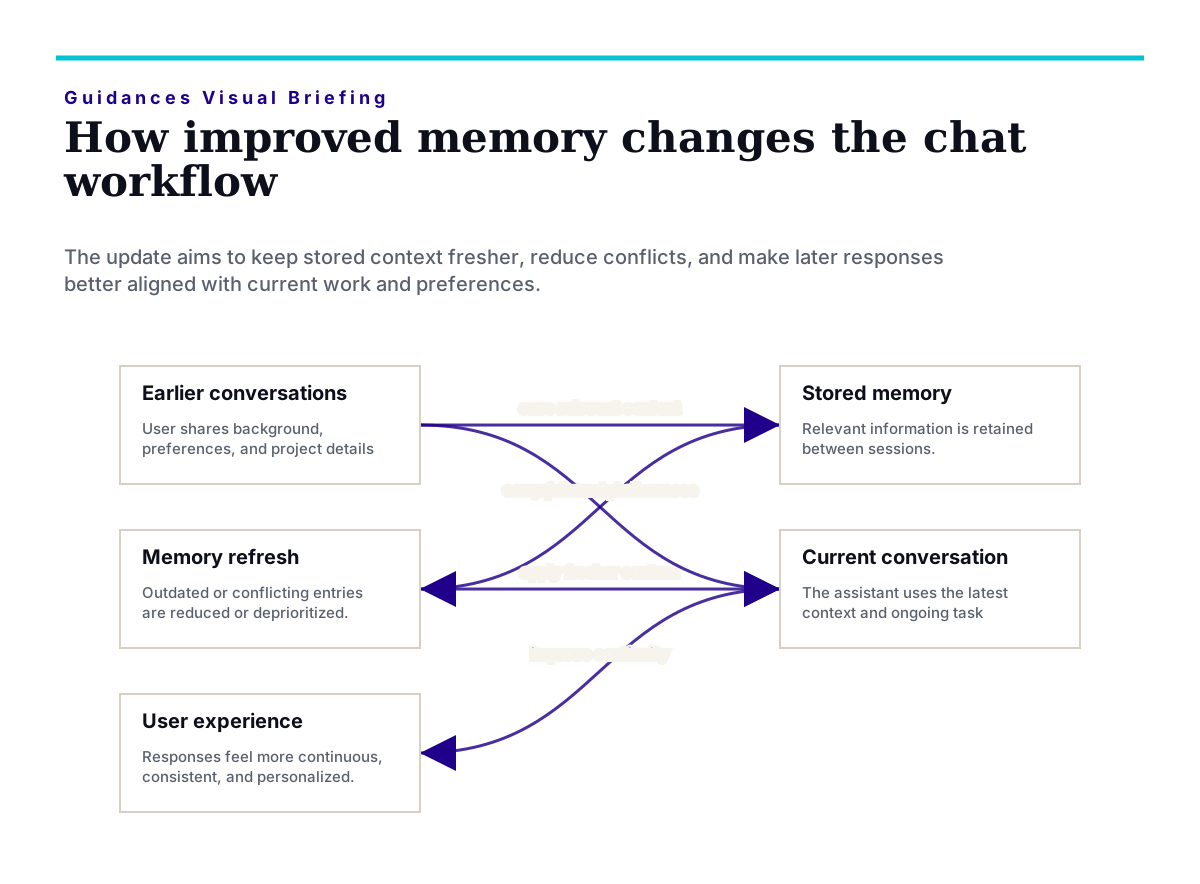
A simple view of how refreshed memory can move from past interactions to more current, personalized responses.
Corrections and safety
See a factual, privacy, rights, or safety issue? Review the corrections process or contact Guidances before relying on this article for important decisions.